
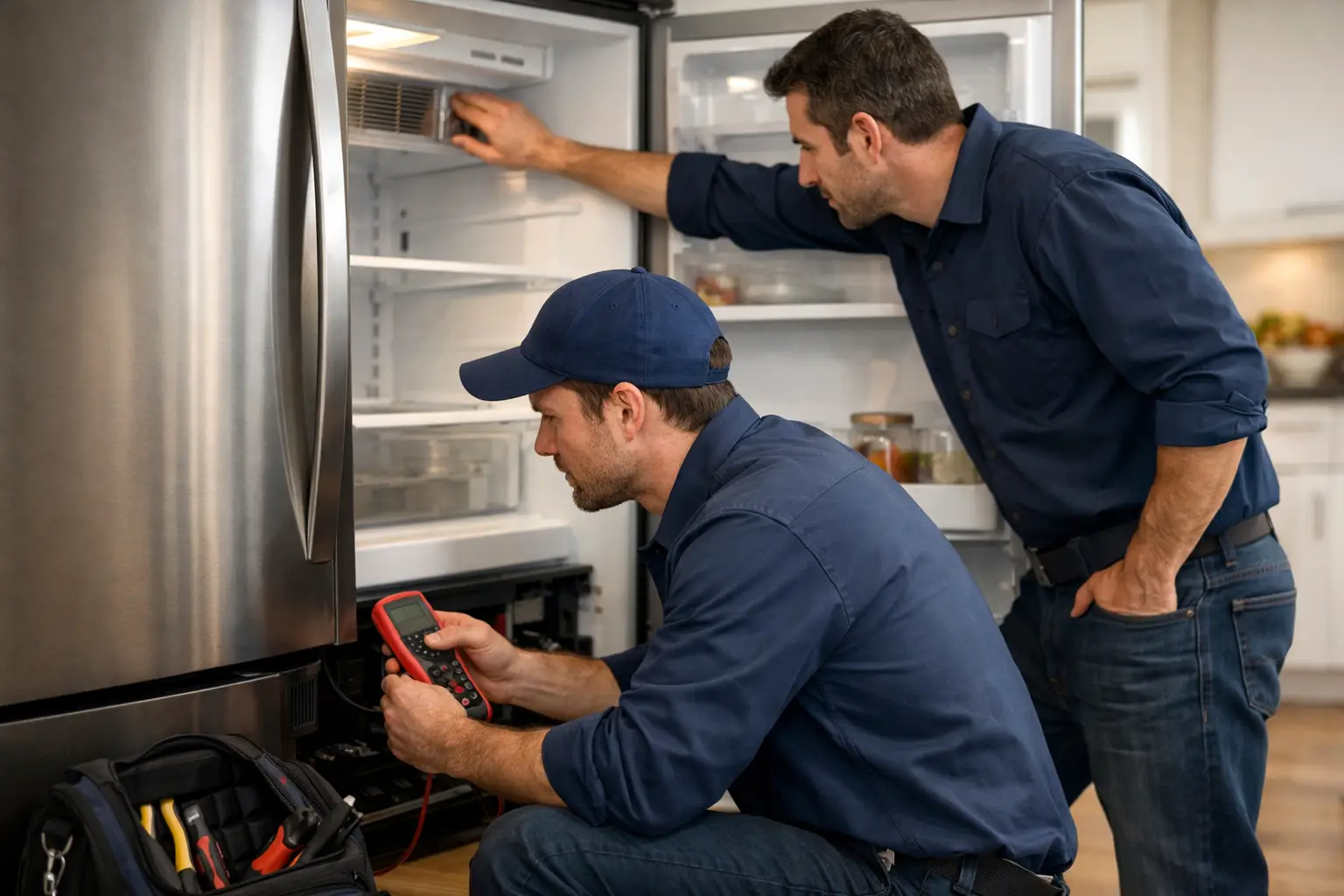
When your milk is warm and the freezer starts turning solid food into slush, you do not need a long lecture – you need a clear refrigerator not cooling guide that helps you figure out what is wrong and what to do next. Some cooling problems are simple and safe to address on your own. Others point to a part failure that should be handled by a trained technician before food loss gets worse.
Refrigerator not cooling guide: start with the easy checks
Before you assume the refrigerator has failed, check the basics. A surprising number of service calls come down to a setting change, blocked airflow, or dirty coils.
Start with the temperature controls. It sounds obvious, but controls can get bumped while loading groceries or cleaning shelves. Most refrigerators should be set around 37 to 40 degrees in the fresh food section and 0 degrees in the freezer. If the setting is too warm, the refrigerator may still run but never reach safe storage temperatures.
Next, look at how full the unit is and how air is moving inside. Refrigerators need space for cold air to circulate. If vents are blocked by food containers, cold air may stay trapped in one section while the rest of the compartment warms up. On the other hand, a nearly empty refrigerator can also have temperature swings, especially if the door is opened often.
Then check the door seal. If the gasket is cracked, loose, or coated with debris, warm air can leak in all day long. That makes the compressor work harder and can leave you with inconsistent cooling, frost buildup, or moisture around the doors. Wipe the gasket clean and make sure the door closes fully without obstruction.
If the refrigerator has lost power briefly, inspect the outlet and breaker as well. Some units appear to be running because the interior light works, but a partial electrical issue can still affect cooling components.
What causes a refrigerator to stop cooling?
If the easy checks do not solve the problem, the issue usually falls into one of a few categories: airflow trouble, frost buildup, dirty heat-release components, or a failed mechanical or electrical part.
Airflow problems are common. Cold air has to move from the freezer side to the refrigerator side in many models. If the evaporator fan is not working, that air does not circulate properly. You may notice the freezer is somewhat cold while the refrigerator compartment is warm. In some cases, the fan may make unusual noises before it stops altogether.
Frost buildup is another frequent cause. If the defrost system is not working, ice can form around the evaporator coils and block airflow. That means the refrigerator may run constantly without cooling well. You might see frost on the back wall of the freezer or hear the fan hitting ice.
Dirty condenser coils can also reduce cooling performance. These coils release heat pulled from inside the refrigerator. When they are covered in dust, pet hair, or grease, the system has a harder time getting rid of heat. The result can be longer run times, weak cooling, and unnecessary strain on the compressor.
Then there are component failures. A bad start relay, failing compressor, damaged thermostat, faulty control board, or refrigerant issue can all lead to poor cooling. These problems usually need proper diagnosis because symptoms can overlap.
Safe troubleshooting steps you can try at home
There are a few things most homeowners and renters can do safely before booking service. The key is staying on the maintenance side and avoiding sealed-system or live electrical repairs.
First, unplug the refrigerator and clean the condenser coils if they are accessible. On some units, the coils are underneath behind a lower front grille. On others, they are on the back. Use a coil brush or vacuum attachment and remove as much dust as possible. If you have pets, this step matters even more.
Second, give the refrigerator room to breathe. If it is pushed too tightly against the wall, heat may not vent properly. Pull it forward slightly if the manufacturer clearance allows it.
Third, listen for normal operating sounds. You should typically hear some hum from the compressor and fan activity at different times. If the unit is completely silent when it should be cooling, or if you hear repeated clicking without startup, that points more strongly to a part issue.
Fourth, inspect for heavy frost. If the freezer back panel is covered in ice, you may be dealing with a defrost problem rather than a total cooling failure. A temporary unplug-and-defrost may improve airflow for a short time, but it usually will not solve the underlying failed part.
Finally, reduce door openings and move food to another cold storage option if temperatures are climbing. Once a refrigerator rises above safe levels, the problem shifts from appliance performance to food protection.
Signs the problem is more serious
A refrigerator that is not cooling is not always an emergency in the technical sense, but it becomes urgent quickly. The longer it runs warm, the more food you may have to throw out, and the more stress the system may be under.
If the refrigerator is warm and the freezer is also softening, the issue is usually more significant than a simple airflow imbalance. If you smell something hot, hear loud buzzing or clicking, or notice water pooling repeatedly, it is time to stop guessing.
The same applies if the compressor is extremely hot to the touch, the unit keeps tripping power, or the refrigerator cools only intermittently. These are not ideal situations for DIY trial and error. Refrigerators rely on a combination of electrical parts, motors, fans, sensors, and sealed cooling components. Replacing the wrong part wastes time and often does not fix the real issue.
When to call for professional refrigerator repair
A good refrigerator not cooling guide should also tell you when to hand the job off. If cleaning the coils, checking settings, confirming airflow, and inspecting the gasket do not restore cooling, professional service is usually the smart next step.
Call for repair if the refrigerator is running but not getting cold, if frost keeps returning, if one compartment cools while the other does not, or if the appliance has stopped cooling after making unusual sounds. These symptoms often require testing parts rather than guessing.
For property managers and busy households, speed matters. Waiting too long can turn a manageable repair into a bigger disruption, especially when groceries, medication, or business inventory are involved. In homes and small commercial settings, getting a trained technician involved early can reduce downtime and help avoid repeat issues.
A qualified appliance repair technician can test the evaporator fan, thermostat, defrost system, start components, compressor performance, and control issues safely. That matters because two refrigerators with the same symptom can have very different causes.
What to do while you wait for service
Keep the doors closed as much as possible. Every time they open, cold air escapes and the temperature rises faster. If the freezer is still holding temperature, you may be able to move some items there temporarily.
Check food carefully. Perishable items such as dairy, meat, cooked leftovers, and certain medications should not stay in a warm refrigerator for long. If you are unsure whether food is still safe, it is better to be cautious.
It also helps to clear a path around the appliance and remove a few items if access is tight. That can make diagnosis faster once the technician arrives.
How to reduce the chances of another cooling failure
Not every refrigerator problem is preventable, but basic maintenance goes a long way. Clean the condenser coils regularly, especially if you have pets or the kitchen collects a lot of dust. Make sure the door seals stay clean and the doors are closing fully.
Try not to overload shelves in a way that blocks vents, and pay attention if the refrigerator starts sounding different. Small changes in noise, frost, or temperature consistency often show up before a complete cooling failure.
If your refrigerator is in a garage, utility room, or other space with wider temperature swings, performance can depend on the model and conditions. That is one of those it-depends situations homeowners often miss. The appliance may not be failing – it may be struggling in an environment it was not designed to handle.
For homeowners and renters in Jacksonville, Orlando, Tampa, Columbia, or Charleston, fast local help can make all the difference when a refrigerator stops cooling. CASPI Home Service focuses on practical, warranty-backed repair support so families and property managers can get back to normal without the usual hassle.
A warm refrigerator can feel like a small problem for the first hour and a major one by dinner, so if the simple checks do not fix it, trust what you are seeing and act early.