
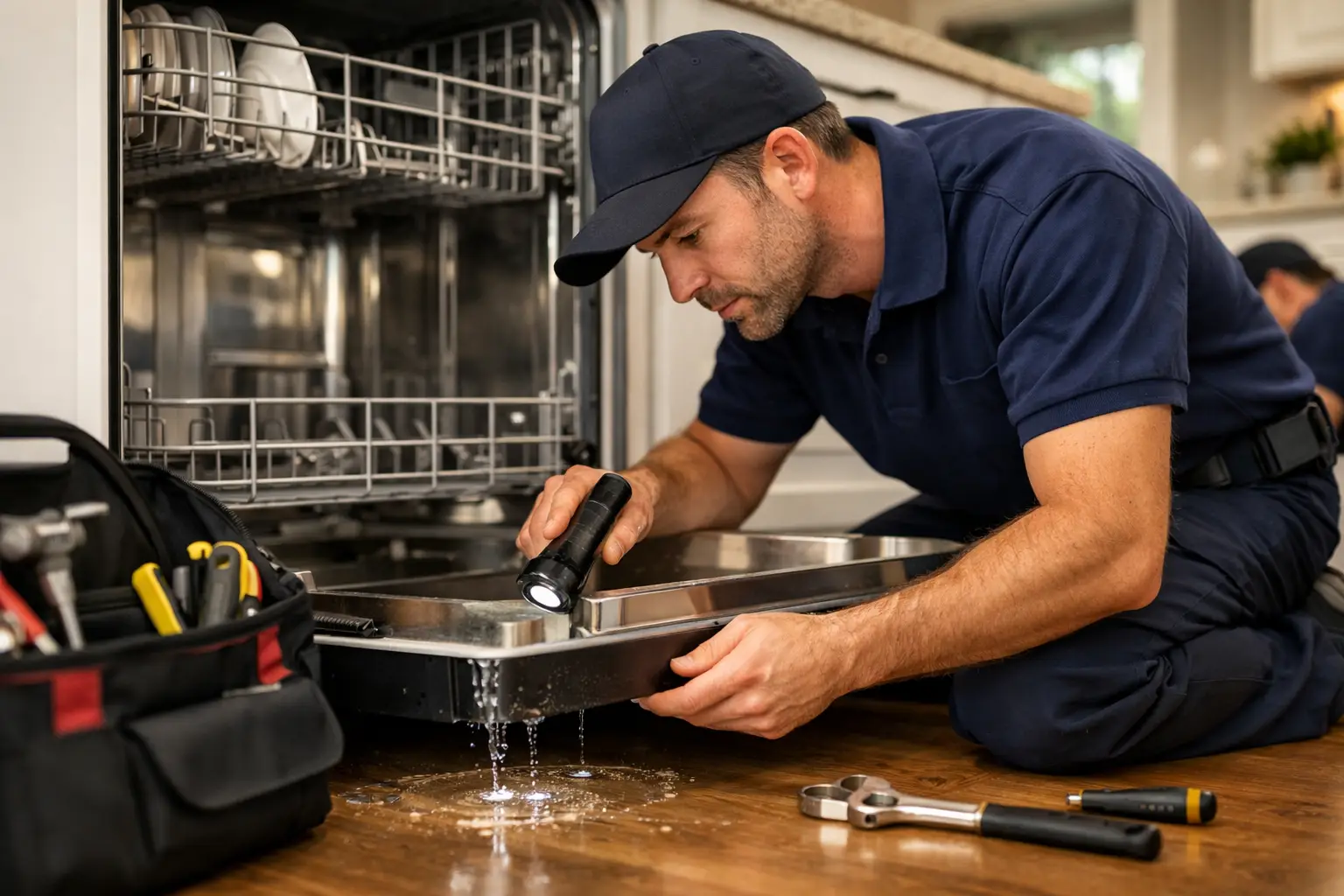
A puddle under the dishwasher rarely shows up at a convenient time. It usually appears right before guests arrive, during cleanup after dinner, or when you are already juggling three other things. This dishwasher leaking water guide is built for that moment – when you need a clear next step, not a pile of guesses.
Some leaks are simple, like a door that did not seal tightly because a utensil blocked the rack. Others point to a part that is worn, loose, or cracked. The key is to act quickly. Even a small leak can damage flooring, cabinets, baseboards, and the subfloor if it keeps happening cycle after cycle.
Dishwasher leaking water guide: start here first
Before you inspect anything, stop the cycle and avoid running the dishwasher again until you know more. If there is standing water on the floor, dry it up so you can tell whether new water appears during your checks. It also helps prevent slips and reduces the chance of damage spreading.
Next, look at where the water is showing up. Water at the front of the machine often points to the door gasket, the latch, overloaded racks, or too much suds. Water under the center or toward the back can suggest a hose, pump, inlet valve, or tub issue. That location clue matters because it narrows the list fast.
If your dishwasher was recently installed, moved, or serviced, pay special attention to connections and leveling. A dishwasher that is slightly tilted forward can send water toward the door. A drain or supply connection that was not tightened properly can leak only during certain parts of the cycle, which is why the problem can seem random at first.
The most common reasons a dishwasher leaks
A worn door gasket is one of the most frequent causes. The rubber seal around the door can harden, crack, flatten, or collect debris over time. When that happens, water can escape during wash and rinse cycles. If you see visible damage or grime buildup on the seal, that is a strong clue.
Another common issue is the door itself not closing the way it should. A bent rack, a large plate, or a utensil sticking out can prevent a proper seal. Sometimes the latch is worn, so the door looks shut but is not tight enough to keep water in. This tends to create leaks near the front corners.
Using the wrong detergent can also trigger a leak. Dish soap meant for hand washing creates too many suds, and those suds can push past the door. Even the right dishwasher detergent can cause problems if too much is used or if a rinse aid setting is too high for your water conditions. If the leak comes with foamy residue, suds are a likely suspect.
Clogged or damaged spray arms can play a role too. If a spray arm is cracked or blocked, it can shoot water in an unusual direction, sometimes straight at the door seam. That does not always mean the door seal is bad. It may just mean the water is being forced where it was never meant to go.
Then there are the parts you cannot easily see from the front. A leaking water inlet valve, a loose drain hose, a failing pump seal, or a cracked sump component can let water escape underneath the unit. These leaks often show up later in the cycle or only while draining.
Safe checks you can do yourself
Start with the easy, visible areas. Open the door and inspect the gasket all the way around. Wipe it clean with a soft cloth and look for splits, brittleness, warping, or spots where it has pulled away. Check the bottom door area as well, since debris there can interfere with the seal.
Then slide the racks in and out. Make sure nothing is sticking out past the rack edge and that tall items are not forcing the spray pattern toward the door. Overloading can create leaks even when no parts are technically broken. It depends on how the dishes are arranged and whether the spray is being redirected.
Take a look at the spray arms. Remove any visible food particles from the holes and check for cracks. If the arm is damaged, cleaning alone will not solve the problem. A cracked arm can spray water with extra force in the wrong direction.
Check your detergent next. If someone accidentally used regular dish soap, stop there – that alone can explain the leak. If you are using dishwasher detergent, consider whether too much was added. Hard water, soft water, rinse aid settings, and detergent type can all affect sudsing.
If you can safely access beneath the sink, inspect the dishwasher drain hose where it connects. Look for moisture, drips, or mineral buildup around the fittings. If the connection is loose, that may be the source. Do not start disassembling plumbing or internal dishwasher parts if you are unsure what you are looking at. At that point, the safer move is service.
When the problem is not the dishwasher itself
Not every dishwasher leak starts inside the machine. A sink drain issue, a garbage disposal connection, or a high drain hose problem can send water where it should not go. That is why leak location and timing matter so much.
For example, if water appears mostly when the dishwasher drains, the issue may be related to the drain path rather than the wash cycle. If it leaks from the front only while spraying, the focus shifts back to the door, detergent, loading, or spray arm behavior. This is where a careful diagnosis saves time and prevents replacing the wrong part.
Floor condition can make the problem look worse than it is. Uneven flooring can let water travel and pool away from the actual source, so the puddle you see may not be where the leak began. That is another reason homeowners often misjudge the cause.
Signs it is time to call for professional dishwasher repair
If you have cleaned the gasket, checked the loading, verified the detergent, and the leak keeps coming back, it is time to bring in a technician. The same applies if you see water coming from underneath the unit, hear unusual grinding or humming, or notice the dishwasher is not draining properly.
A recurring leak usually means there is a failing part, not just a one-time spill. Pump seals, inlet valves, internal hoses, float switches, and sump components can all be involved. These are not ideal trial-and-error repairs, especially when water damage is on the line.
Professional service also makes sense if the dishwasher is newer and the leak started after installation or a recent move. Leveling issues, hose routing, and connection problems can be corrected quickly by someone who works on these systems every day. For busy households and property managers, that is often the fastest path back to normal.
Trusted local appliance repair matters here because a leak is not just an appliance inconvenience. It can turn into cabinet swelling, flooring damage, and repeat cleanup if it is left unresolved. A company like CASPI Home Service approaches this the way homeowners need it handled – with clear communication, upfront recommendations, and repair work backed by warranty protection.
How to reduce the chance of another leak
A few simple habits can help. Keep the gasket clean, avoid overloading, and make sure nothing blocks the door from closing fully. Use only dishwasher detergent and follow the product guidance rather than guessing with the amount.
It also helps to pay attention to small warning signs. A little moisture around the door, extra suds, or a cycle that sounds different than usual can all show up before a major puddle does. Catching the issue early is the best way to avoid bigger damage.
If your dishwasher is older, wear and tear becomes a factor. Rubber seals lose flexibility, fittings loosen, and internal parts simply age out. That does not always mean replacement is the answer, but it does mean leaks should be taken seriously instead of watched for another few weeks.
A leaking dishwasher is frustrating, but it is usually fixable once the real cause is identified. The smartest move is to stop the cycle, narrow down where the water is coming from, and avoid guessing your way into a bigger repair. A fast, accurate fix protects more than the appliance – it protects the space around it too.