
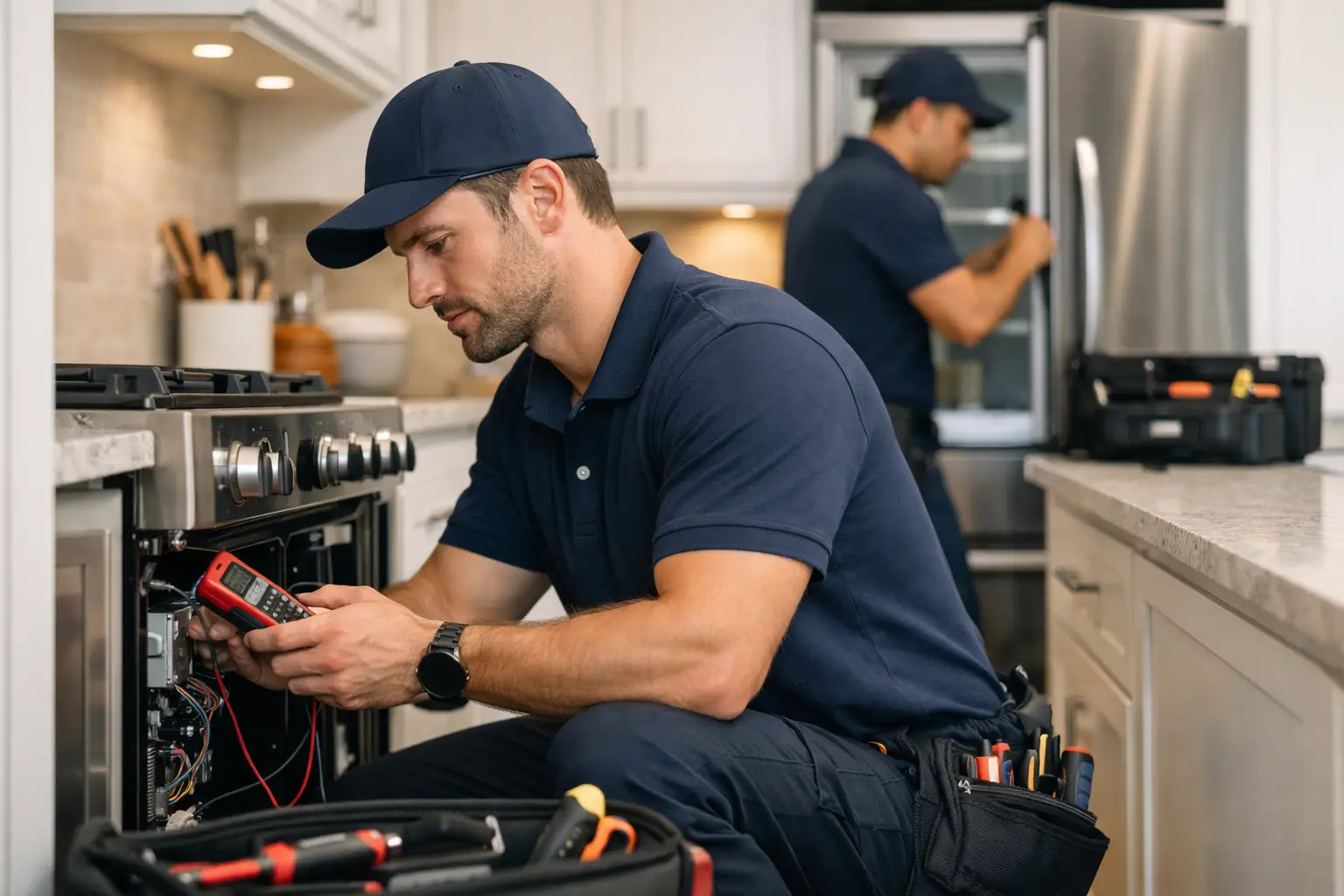
When your refrigerator stops cooling or your washer quits mid-cycle, you are not shopping for a theory. You are looking for someone who can show up prepared, diagnose the issue correctly, and fix it without turning one problem into two. That is exactly why a certified appliance technicians guide matters. It helps you sort out who is truly qualified, who is simply available, and what kind of service actually protects your home, your time, and your budget.
For most households, appliance repair feels urgent because it is urgent. A broken dryer can pile up laundry fast. A failed oven can disrupt meals for the week. A leaking dishwasher can threaten floors and cabinets if the issue is ignored too long. In those moments, the right technician is not just a convenience. It is the difference between a repair that lasts and a second appointment you never wanted.
What a certified appliance technicians guide should tell you
The word certified gets used loosely, and that can make it harder for homeowners to know what it really means. At a practical level, certification points to training, technical knowledge, and a level of accountability. It suggests the technician has been educated on appliance systems, safety procedures, diagnostic methods, and in many cases brand-specific repair standards.
That does not automatically mean every certified technician is the best fit for every job. Experience still matters. So does familiarity with the appliance brand, access to common replacement parts, and the ability to explain the problem in plain English. A newer certified technician may have strong training but less field judgment. A veteran repair pro may have years of hands-on work but uneven documentation or inconsistent service habits. The strongest service companies usually combine both – formal training and real-world repair experience.
For homeowners and property managers, the value is straightforward. Certified technicians are generally better positioned to diagnose accurately, follow safe repair practices, and avoid guesswork. That reduces the chance of misdiagnosis, repeat visits, and preventable damage.
Why certification matters in real service calls
A broken appliance is rarely just a broken appliance. It is a disrupted routine, spoiled groceries, tenants calling, or a business trying to keep daily operations moving. In those situations, speed matters, but speed without competence creates its own problems.
Certified technicians tend to work more methodically. They know how to test components instead of replacing parts based on assumptions. They understand manufacturer specifications and common failure patterns. They are also more likely to recognize when a symptom points to a deeper issue, such as a refrigerator problem caused by airflow restrictions rather than a failed compressor, or a dryer that is overheating because of venting issues instead of a bad heating element.
That kind of diagnosis saves time. It can also save money by avoiding unnecessary parts and repeated labor. For customers, that often translates into a smoother first visit and more confidence in the repair recommendation.
How to evaluate certified appliance technicians
A good certified appliance technicians guide should not stop at the word certified. You also want to look at how the company delivers service from the first call to the completed job.
Start with communication. If a service provider is difficult to reach, vague about next steps, or unclear about what happens during the appointment, that is usually not a great sign. Good companies make booking simple, explain the process, and set expectations clearly.
Next, look at diagnosis and pricing transparency. Upfront pricing matters because homeowners should know what they are agreeing to before work begins. A clear estimate, along with an explanation of the issue, tells you the company respects your decision-making.
Warranty protection is another major factor. A repair company that stands behind parts and labor is showing confidence in its workmanship. That does not mean every future issue will be covered forever, but it does mean the company is prepared to support the repair if something related needs attention after the visit.
Finally, consider service range. This is especially important if you are managing a home, rental property, or small commercial space. A company that handles both appliance repairs and related home-service needs can save time and reduce scheduling headaches. If your dishwasher issue also exposed minor floor damage, or your appliance installation needs a mounting or finish detail handled correctly, one trusted service partner is often more practical than juggling separate contractors.
Certified appliance technicians guide for common household repairs
Not every appliance problem demands the same level of urgency, but many do benefit from trained service right away. Refrigerators are the clearest example. Cooling issues can quickly lead to food loss, and some symptoms that seem minor at first – unusual cycling, warm sections, frost buildup, water leaks – can point to a larger failure if left alone.
Washers and dryers are another category where certification helps. These machines combine electrical components, moving parts, sensors, drainage, and in the case of dryers, heat and airflow. A poor repair can lead to recurring breakdowns, water damage, or safety concerns. The right technician should be able to identify whether the issue is mechanical, electrical, or tied to installation conditions.
Dishwashers, ovens, and cooktops also require careful diagnosis. A dishwasher that will not drain may have a simple obstruction, but it could also involve a pump, switch, or control issue. An oven with uneven heating may need more than a heating element. A cooktop that will not ignite may have an ignition fault, wiring problem, or moisture-related issue. In each case, experience matters, but structured technical knowledge matters too.
What homeowners often overlook
One of the most common mistakes is focusing only on the fastest available appointment. Fast service is valuable, especially when an essential appliance is down, but speed should come with preparation. Ask whether the technician is trained on your appliance type, whether the company provides warranty-backed work, and whether pricing is approved before repair begins.
Another overlooked point is professionalism in the home. Appliance repair is a technical service, but it is also a customer service experience. Homeowners want clear communication, respect for the property, and confidence that the person working in the kitchen, laundry room, or garage knows what they are doing. That part matters just as much as technical skill because trust is built through the full experience, not just the final invoice.
It is also worth paying attention to whether the company seems set up for follow-through. If a part needs to be ordered, do they explain the process? If the issue changes during diagnosis, do they walk you through it? If you have a rental property or a small business, can they communicate in a way that helps you make decisions quickly? These details separate a one-off repair provider from a reliable long-term service partner.
When repair is worth it and when it depends
A certified technician should not push every appliance toward repair no matter what. Sometimes the better answer depends on the age of the unit, the condition of major components, part availability, and how often the machine has needed service recently.
That is where honest guidance matters. Some repairs are straightforward and absolutely worth doing. Others make less sense if the appliance is near the end of its useful life or if one major failure is likely to be followed by another. The right technician will explain the trade-off clearly instead of pressuring you into a decision.
For many customers, this is where trust becomes the deciding factor. A company that gives realistic recommendations, offers clear pricing, and backs the work with a warranty is easier to rely on the next time something goes wrong.
Choosing a service company, not just a technician
Most people search for a technician, but what they actually need is a dependable service system. That includes scheduling, dispatch, diagnosis, parts support, warranty coverage, and customer care after the job. A strong local company with certified technicians offers more consistency than a random one-time hire because the service is backed by a team and a process.
That is especially valuable for busy families, landlords, and property managers who do not have time to chase updates or coordinate multiple contractors. In markets like Jacksonville, Orlando, Tampa, Charleston, and Columbia, homeowners often need quick help without sacrificing quality. A family-owned company such as CASPI Home Service builds trust by combining fast response, certified repair experience, and practical home-service support under one roof.
The best choice is usually the provider that can do three things well at once: respond quickly, diagnose accurately, and stand behind the work. If a company can offer that consistently, you are not just solving today’s breakdown. You are making future repairs easier, less stressful, and far more predictable.
The next time an appliance fails, look past the first available appointment and ask a better question: who is equipped to fix it right the first time and still be there if you need support after the job is done?