
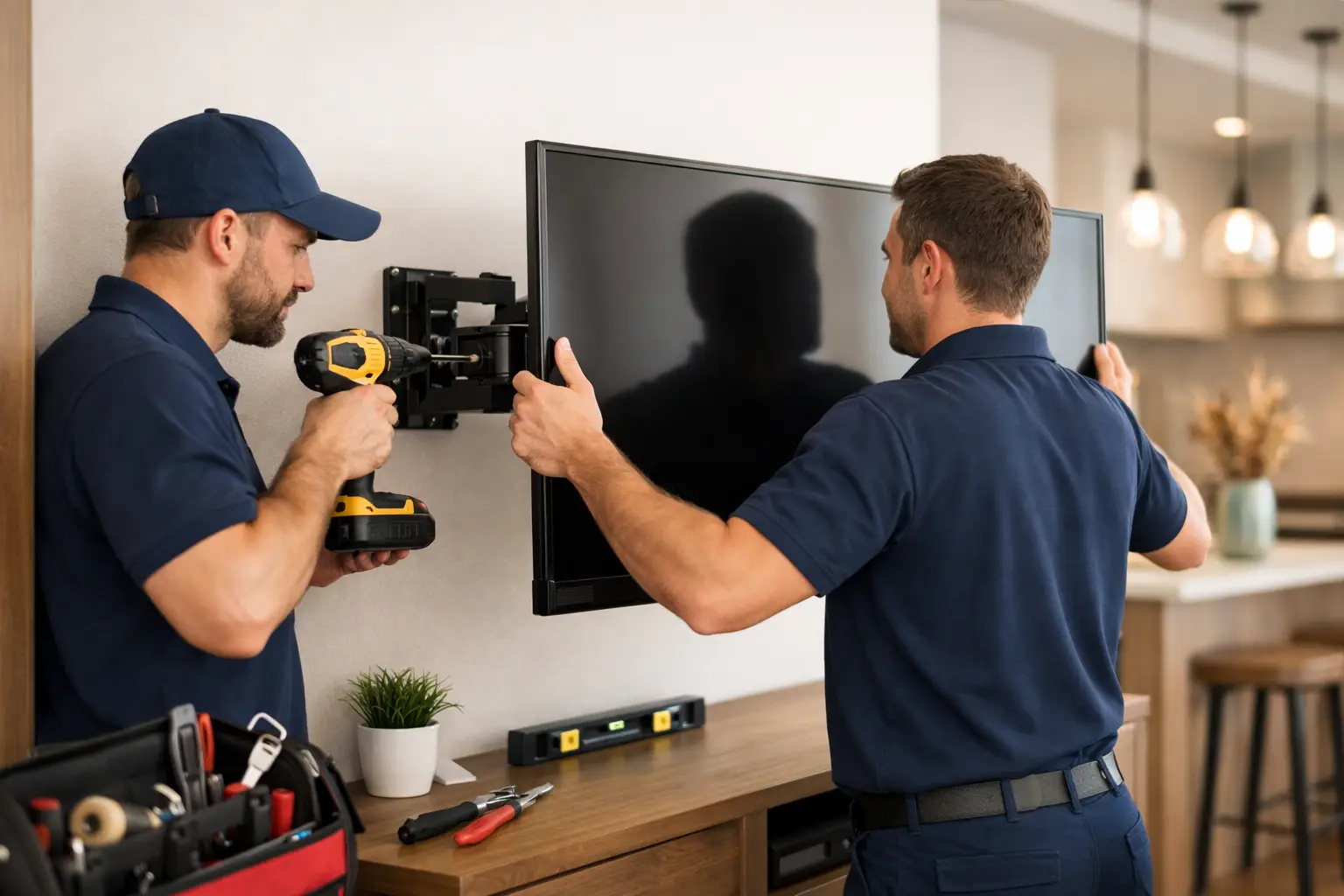
A wall-mounted TV looks clean and saves space right away. But when people ask how to mount tv safely, the real issue is not the bracket – it is whether the wall, hardware, and placement can actually support the load day after day without shifting, loosening, or damaging the room.
For most homeowners and renters, the safest mount is the one that fits both the TV and the wall. That sounds obvious, but this is where problems usually start. A bracket may be rated for the TV size, yet still be installed in weak drywall, off-center studs, or at a height that puts stress on the mount every time the screen is adjusted. Safe mounting is part hardware choice, part wall assessment, and part careful installation.
What safe TV mounting really means
A safe installation does more than keep the TV from falling. It should hold the set level, resist movement over time, and keep cords, outlets, and nearby furniture from creating extra strain. If the mount pulls away from the wall even slightly, that is a warning sign. So is a bracket that flexes too much when tilted or extended.
Safety also includes the viewing setup. A TV mounted too high can lead to neck strain. A TV mounted above unstable furniture or too close to a door swing can become a daily problem even if the bracket itself is secure. The best result is not just strong – it is practical for how the room is actually used.
Before you mount a TV safely, check these basics
Start with the wall type. Wood studs behind drywall are typically the most straightforward option for a secure installation. Concrete or masonry can also work well, but they require the right anchors and drilling approach. Drywall by itself is not enough for most full-size TVs, even when heavy-duty anchors are used. Metal studs can be more complicated and often need specialized hardware or a different mounting plan.
Next, confirm the TV specifications. The mount must match the screen size, weight, and VESA pattern, which is the bolt layout on the back of the TV. If any one of those is off, the fit may be unstable even if the bracket seems close enough.
Then think about the mount style. A fixed mount keeps the TV close to the wall and usually has fewer moving parts, which can make it a strong option for simple rooms. A tilting mount helps reduce glare and can be useful when the TV sits slightly higher. A full-motion mount offers flexibility, but it puts more force on the wall, especially when the arm is extended. That extra convenience comes with extra installation demands.
How to mount tv safely on different wall types
Wood-stud walls are usually the best case. The lag bolts should go directly into solid studs, not just drywall. Stud spacing matters because the wall plate needs proper support across its mounting points. If the studs do not line up well with the ideal TV position, the safest solution is often to adjust placement slightly rather than force a poor connection.
Concrete and brick can support a TV very well when installed properly. The main issue is using anchors and fasteners designed for that material. Old masonry can vary in strength, so the condition of the wall matters as much as the material itself.
Drywall-only mounting is where many DIY jobs go wrong. Lightweight screens in very specific situations may allow alternative hardware, but for most living room TVs, drywall alone is not a dependable long-term solution. If the TV is valuable, the wall finish is fragile, or children or pets may bump the setup, this is not the place to cut corners.
Above a fireplace is another common request, but it depends on heat, height, and wall construction. If the wall gets warm during regular fireplace use, that can shorten the life of the TV. The viewing angle can also be uncomfortable if the screen sits too high. It can look great, but it needs more planning than people expect.
Placement matters as much as the hardware
One of the easiest ways to improve a mounting job is to choose the right height before drilling. In most rooms, the center of the screen should sit near seated eye level. That changes a bit depending on sofa height, screen size, and whether the mount tilts, but the principle stays the same. If you need to look up for hours at a time, the placement is not working for you.
Check the room from multiple angles. Sun glare, lamp reflections, and side seating can all affect the final position. Also look at nearby outlets and cable paths. A clean setup is not just about appearance. If cords have to stretch, bend sharply, or hang where they can be snagged, that adds wear and increases risk over time.
The most common TV mounting mistakes
The biggest mistake is assuming any solid-looking wall is safe to drill into. Without locating studs correctly or confirming the wall material, even a level bracket can fail later. A second common mistake is using the wrong hardware because it came in the box or looked similar enough.
Another issue is over-tightening or under-tightening fasteners. Too loose, and the bracket shifts. Too tight, and you can strip the stud, crack drywall, or damage the TV mounting points. Good installation is precise, not forced.
People also underestimate cable planning. If power cords and HDMI lines are pinched behind the TV or stretched across the mount’s moving arm, they can wear out or pull loose. On full-motion mounts, cable slack needs to be managed carefully so movement does not create strain.
And then there is weight distribution. Larger TVs are awkward to lift and align, even when they are not especially heavy. Trying to hang one alone often leads to scratched walls, uneven placement, or an unsafe connection because the installer is rushing to get the set on the bracket.
DIY or professional installation?
This depends on the wall, the mount type, and your comfort level with measuring and drilling. A straightforward fixed mount on a standard stud wall may be manageable for someone with the right tools and patience. If you know how to locate studs accurately, verify level, and use the correct fasteners, a basic installation can go smoothly.
But many jobs are less simple than they appear. Full-motion mounts, large screens, brick walls, fireplace installations, and rooms with tricky outlet placement all raise the stakes. If you are unsure whether the wall can support the setup, professional installation is usually the safer choice.
That is especially true in busy households, rental properties, and small businesses where the TV will be used often and cannot afford to come loose. A secure mount is one of those jobs where peace of mind matters. When a trained technician handles the wall assessment, hardware fit, leveling, and final stability check, you avoid the trial-and-error that often costs more time than expected.
When to call a pro for how to mount tv safely
If the studs are hard to locate, the wall surface seems uneven, the bracket instructions are unclear, or the TV is especially large, it makes sense to stop before drilling more holes. The same goes for mounting over a fireplace, on masonry, or with a full-motion arm.
Professional help also makes sense when you want the finished setup to look clean from day one. That includes proper alignment with furniture, sensible viewing height, neat cable routing, and a stable result that does not need adjustment a week later. For homeowners and renters who already have enough on their schedule, bringing in a trusted local expert can turn a half-day project into a done-right appointment.
CASPI Home Service helps customers with TV mounting and other home installation needs when they want the job handled safely, neatly, and without the guesswork.
A safer setup lasts longer
The best TV mount is not always the most flexible or the lowest profile. It is the one installed on the right wall, with the right hardware, at the right height for the room. If you are thinking about how to mount tv safely, treat the planning step as part of the installation, not a delay. A few careful decisions up front can save you from wall damage, screen damage, and a bracket you never fully trust.