
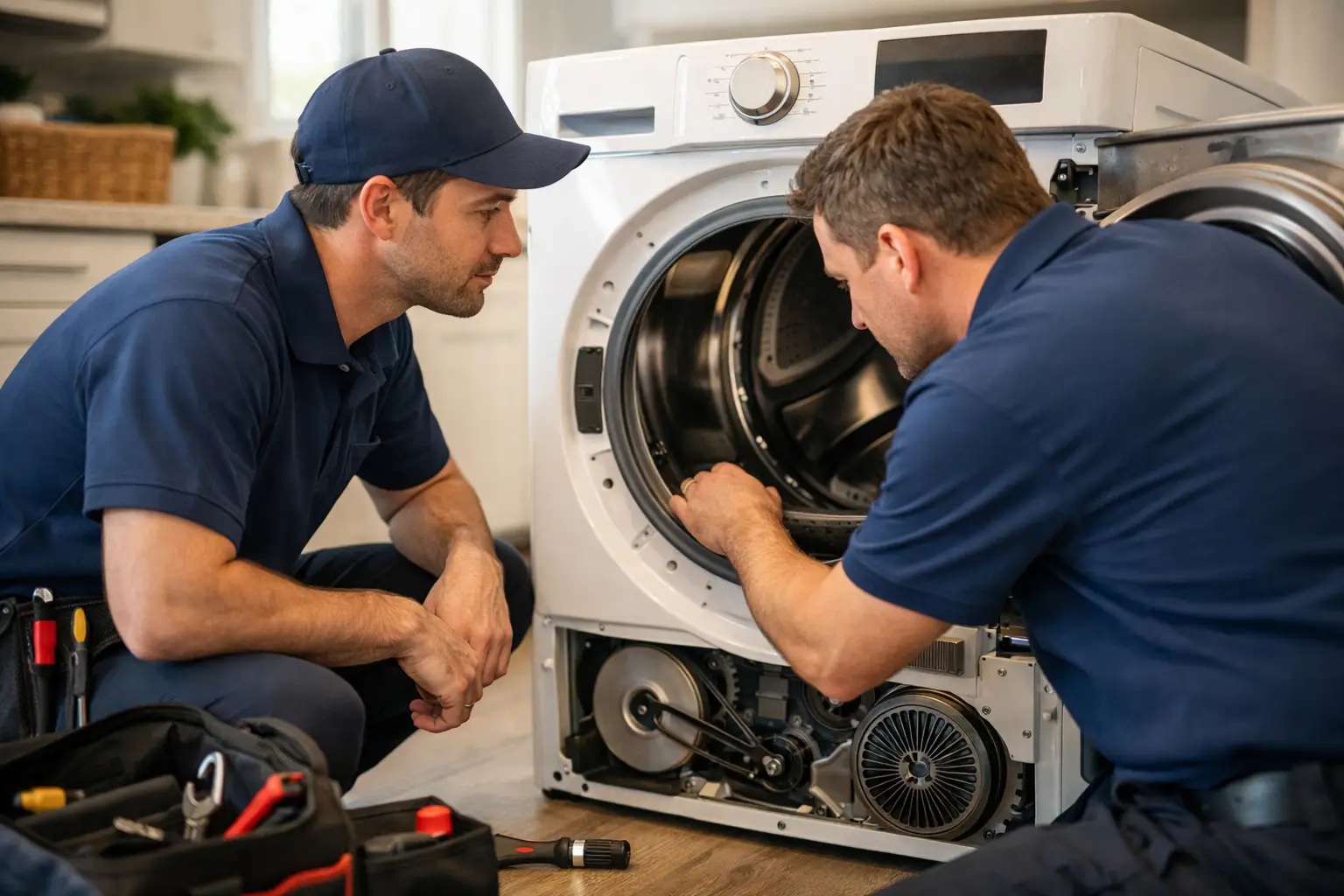
That high-pitched squeak usually starts small. One load sounds a little off, the next is louder, and before long you are standing in the laundry room wondering, why is dryer squeaking and is it still safe to use? In many cases, a squeaking dryer is warning you that a moving part is wearing down. The good news is that the sound often points to a fixable issue – especially if you catch it early.
A dryer should make some normal operating noise, but it should not squeal, chirp, or screech through an entire cycle. When it does, the problem is usually tied to friction. Something that is supposed to glide, spin, or support the drum is no longer doing its job cleanly. Sometimes that means a simple part has worn out. Sometimes it means continued use can lead to a bigger repair.
Why is dryer squeaking during a cycle?
If your dryer squeaks only when the drum starts turning, the issue often involves support parts that carry the drum’s weight. If the squeak continues the whole time, or gets worse as the dryer heats up, that can point to bearings, rollers, the idler pulley, or even the belt. The exact cause depends on the style of dryer and where the sound seems to come from.
Front squeaks, rear squeaks, and rhythmic squeaks can mean different things. A sharp metal-on-metal sound usually suggests wear that has gone beyond a minor nuisance. A soft chirp that comes and goes may be an early warning. Either way, dryers rarely fix themselves. The longer a worn part keeps turning under load, the more likely it is to damage nearby components.
The most common reasons a dryer starts squeaking
Worn drum rollers
Drum rollers help the dryer drum rotate smoothly. Over time, these rollers can wear down, harden, or develop flat spots. When that happens, the drum no longer turns evenly, and you may hear a squeak, thump, or rolling chirp.
This is one of the most common causes of dryer noise because rollers handle constant motion and heat. In the early stage, the sound may come and go. Later, it can become a steady squeal. If a roller seizes completely, the dryer can strain harder than it should, which may affect the belt and motor too.
A failing idler pulley
The idler pulley keeps tension on the dryer belt. When the pulley wears out, its bearing can start making a sharp squeaking or squealing noise. This sound is often most noticeable right after you press start.
Because the pulley is small, people are sometimes surprised by how loud it can get. The trade-off here is that a bad pulley might seem like a minor issue at first, but if it fails completely, the belt can slip or break. That usually turns a noisy dryer into a dryer that will not tumble at all.
Dryer belt wear
A dryer belt can also cause squeaking, especially if it is frayed, glazed, stretched, or misaligned. Belts are designed to grip and move the drum consistently. Once they wear unevenly, they can rub in ways that create a repetitive squeak.
Not every noisy belt needs immediate replacement on the first day you hear it, but a worn belt is not something to ignore. If the sound is accompanied by poor tumbling or a burning smell, stop using the dryer and have it checked.
Drum bearing or rear support bearing problems
Many dryers use a rear drum bearing or support bearing to help the back of the drum rotate properly. When that bearing wears down, the dryer can make a scraping, squeaking, or screeching noise.
This kind of problem often gets worse with heat and time. It may start as a slight squeak and become a more severe grinding sound. A damaged bearing can also affect how level and stable the drum feels while turning, which increases wear on other parts.
Glides or slides wearing out
Some dryer models use drum glides or slides at the front of the drum instead of, or in addition to, rollers. These parts create a smooth surface for the drum to move across. Once they wear thin, the drum can rub directly against metal or another rough surface.
That rubbing can sound like squeaking, scraping, or a light squeal. If caught early, replacing glides is usually far better than waiting until the drum causes damage to the housing.
Loose objects or debris
Not every squeak means a major internal part has failed. Coins, buttons, bra wires, zippers, and other small items can get trapped near the drum seal or blower area and create odd noises. Lint buildup can also contribute to poor movement or airflow issues that make the dryer sound strained.
This is the best-case scenario, but it still depends on where the object is stuck. If something is lodged in a moving area, forcing another cycle can make the problem worse.
What the sound can tell you
A squeak is not always just a squeak. The timing and tone matter.
If the sound happens only at startup, a belt or idler pulley is a strong possibility. If it repeats with every drum rotation, rollers, glides, or a drum support issue are more likely. If it turns into a screech, the wear may be advanced enough that metal parts are rubbing together.
Heat matters too. Some dryers are quieter for the first minute, then start squeaking as internal parts warm up. That pattern often points to bearings or rollers that are failing under expansion and load. A dryer that squeaks and also takes longer to dry may have more than one issue at the same time.
Is it safe to use a squeaking dryer?
Sometimes for a short period, but not casually and not for long. A squeaking dryer is a warning sign, not background noise to get used to. If the machine still tumbles and dries normally, the issue may not be an emergency at this exact moment. But waiting usually increases the chance that a small wearable part turns into belt damage, motor strain, or drum wear.
You should stop using the dryer right away if the squeak becomes a grinding or scraping sound, if there is a burning smell, if the drum struggles to turn, or if the dryer stops heating or tumbling properly. Those signs suggest the repair is moving beyond routine wear.
For households that rely on the dryer every day, that is the real inconvenience. A part that could have been replaced early may lead to a bigger interruption later.
What you can check before booking service
There are a few practical things you can do without taking the machine apart. Make sure the dryer is level, because an uneven stance can exaggerate certain noises. Check the drum for loose items, inspect pockets from the last load, and listen closely to whether the sound is coming from the front, rear, or underside.
You can also note when the noise starts. Does it happen only with heavier loads like towels? Only when the dryer is cold? Only after ten minutes? That information helps narrow down the problem faster.
What you should not do is keep running test cycles for days while hoping the sound goes away. If internal support parts are wearing out, continued use tends to speed up the damage.
When professional dryer repair makes the most sense
Dryers involve moving parts, heat, electrical components, and in some homes gas connections. That combination is one reason many homeowners prefer professional diagnosis once a dryer starts squeaking consistently. The challenge is not just replacing a part. It is confirming which part has actually failed and whether nearby components were affected.
For example, replacing only the noisy roller may not solve the issue if the idler pulley and belt are worn at the same time. In many cases, a technician will inspect the full support system so you do not fix one source of friction while leaving another close behind.
A service visit also gives you a clearer answer on whether the repair is straightforward or whether the wear is more extensive. For busy households and property managers, that saves time and reduces repeat problems. Companies like CASPI Home Service focus on fast, warranty-backed appliance repair because problems like this are easier to solve before they turn into a full breakdown.
Why is dryer squeaking louder over time?
Because worn parts rarely stay at the same level of wear. Friction builds, surfaces degrade, and the drum keeps putting pressure on the same weak point every time you run a load. A faint squeak today can become a loud screech next week, especially with heavy use.
That is why early attention matters. You are not just trying to get rid of an annoying sound. You are protecting the drum, belt, motor, and other moving parts from extra stress.
If your dryer has started squeaking, trust the sound for what it is – a machine asking for help before it stops altogether.