
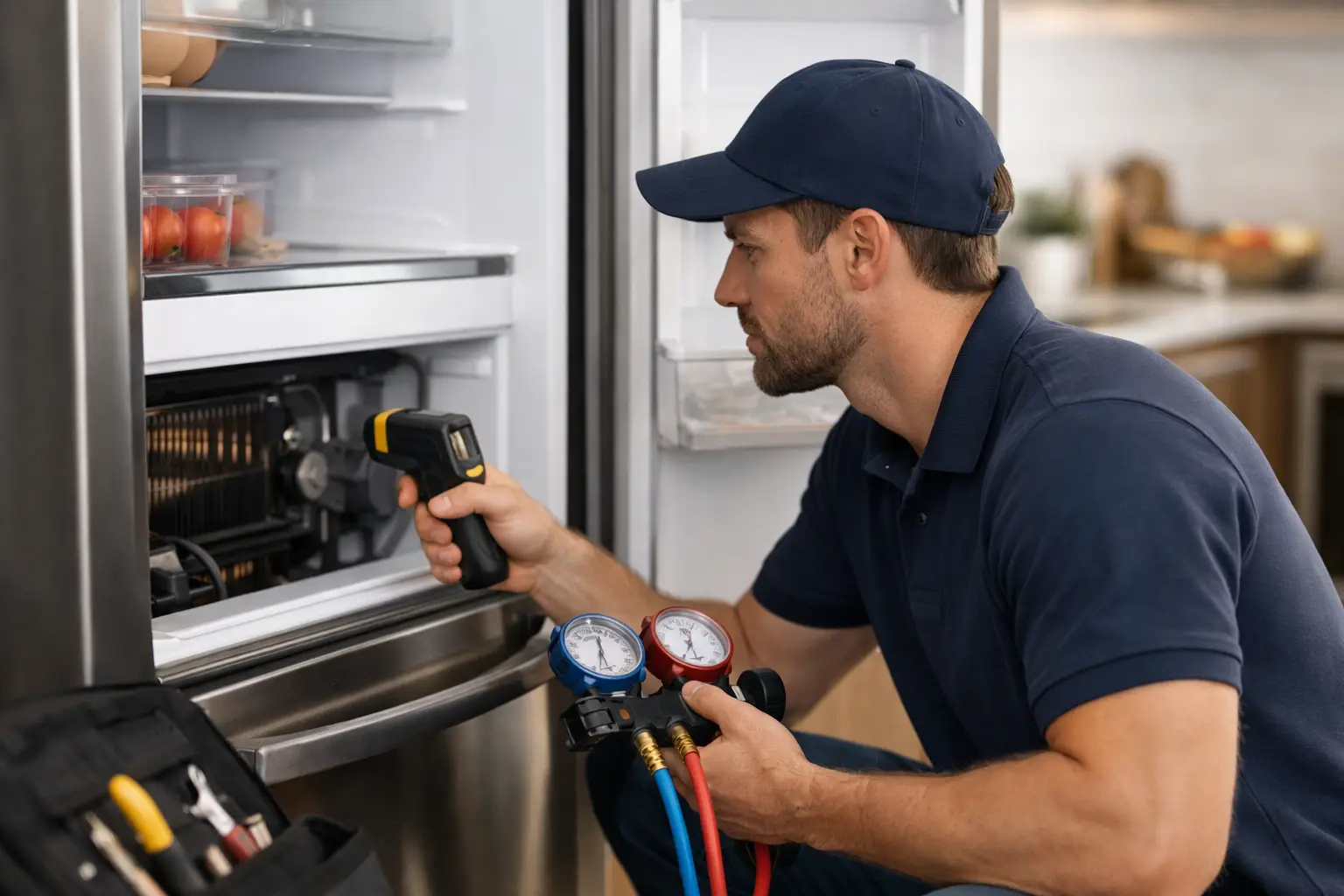
You open the refrigerator for milk and realize the inside feels more cool than cold. That is usually the first warning sign. If you are trying to fix refrigerator not cooling fast, the right move is to act early, before groceries spoil and a small issue turns into a full breakdown.
A refrigerator that cools slowly does not always mean the unit is finished. In many homes, the cause is something simple like blocked airflow, dirty coils, or a door seal that is not closing tightly. In other cases, the problem points to a failing fan motor, thermostat issue, or sealed system trouble that needs a trained technician. The key is knowing which is which.
Why a refrigerator cools slowly
Refrigerators do not drop temperature instantly, even when they are working properly. After a door has been left open, after warm groceries are loaded in, or after a power interruption, it can take several hours to stabilize. That is normal.
What is not normal is when the temperature stays too warm for long stretches, food starts spoiling early, or the freezer seems fine while the fresh food section struggles. Slow cooling usually means cold air is not moving the way it should, heat is not leaving the system efficiently, or a component that controls temperature is not doing its job.
Fix refrigerator not cooling fast with these first checks
Start with the basics before assuming the worst. These checks are safe, practical, and often enough to solve the problem.
Check the temperature settings
It sounds obvious, but it is one of the most common causes. A bumped control panel or dial can leave the refrigerator running warmer than expected. The fresh food section should usually sit around 37 to 40 degrees Fahrenheit, while the freezer should be close to 0 degrees.
If the settings are too warm, adjust them and give the appliance time to respond. Most refrigerators need several hours to show a real improvement.
Look at how full the refrigerator is
Overpacking can block vents and stop cold air from circulating. On the other hand, a nearly empty refrigerator may cycle differently and struggle to hold temperature evenly. The issue is usually not how much food is inside, but whether vents are blocked by large containers, pizza boxes, or tightly packed groceries.
Move items away from the back wall and interior vents. Leave enough space for air to move between shelves.
Make sure the doors seal completely
A weak door gasket lets cold air escape and warm air enter all day long. That forces the refrigerator to work harder and cool more slowly. Check for torn rubber, warped sections, crumbs along the seal, or doors that do not close all the way because shelves or drawers are out of position.
Clean the gasket with mild soap and warm water, then inspect again. If the seal is cracked or loose, replacement is usually the better fix.
Clean the condenser coils
Dirty condenser coils are a major reason refrigerators lose cooling power. When the coils are covered in dust, pet hair, or grease, they cannot release heat effectively. The refrigerator may run longer, cool slower, and wear itself down.
Unplug the appliance first. Then locate the coils, which are usually underneath or behind the unit, and clean them carefully with a brush and vacuum. If it has been more than six months since the last cleaning, this step is worth doing.
Check for poor airflow around the appliance
A refrigerator needs breathing room. If it is pushed too tightly against the wall or boxed in by cabinetry without enough clearance, heat can build up around the system. That can lead to slow cooling, especially in a busy kitchen or garage.
Pull the unit slightly away from the wall if needed and make sure vents are not blocked.
When the problem is inside the refrigerator
If the basic checks do not help, the issue may be tied to internal components that move or regulate cold air.
Evaporator fan problems
The evaporator fan circulates cold air from the freezer into the refrigerator section on many models. If that fan weakens or stops, you may notice the freezer staying somewhat cold while the refrigerator compartment warms up.
You may also hear unusual noises, or no fan sound at all when the door switch is pressed. Fan issues are repairable, but diagnosis matters because the symptom can overlap with defrost problems and control failures.
Damper control issues
The damper controls how much cold air moves from the freezer to the fresh food side. If it sticks closed or does not open enough, the refrigerator can cool very slowly even while the freezer appears normal.
This is one of those problems that is hard to confirm without hands-on inspection. It is also why a refrigerator can seem only partly broken.
Defrost system trouble
If frost builds up around the evaporator coil, airflow drops and cooling performance suffers. A failed defrost heater, thermostat, or control board can cause that buildup over time. You might see frost on the back interior panel or notice that cooling gets worse day by day instead of all at once.
Manual defrosting may provide short-term relief, but it does not fix the failed part causing the ice to return.
Signs it is time to call a professional
Some refrigerator problems are reasonable to check yourself. Others are not worth guessing on, especially when food safety and compressor health are on the line.
Call for service if the refrigerator is running constantly but not getting cold, if the freezer is also warming up, if you hear clicking or buzzing from the back, or if there is visible frost buildup that keeps returning. The same goes for water leaks tied to internal freezing issues, burning smells, or temperature swings that continue after cleaning coils and checking seals.
Sealed system problems, compressor issues, refrigerant leaks, and electronic control failures require proper tools and training. DIY trial and error can cost more time and lead to a bigger repair later.
What not to do when trying to fix refrigerator not cooling fast
A lot of homeowners lose time by making changes that create new problems. Turning the temperature to the coldest setting is a common one. Sometimes that helps briefly, but it can also mask the real issue or trigger uneven cooling and freezing in the wrong areas.
Another mistake is scraping ice with sharp tools during a frost problem. That can damage interior panels or puncture important components. It is also smart to avoid repeatedly unplugging and restarting the unit without a diagnosis. If a control board or compressor is failing, random resets rarely solve it.
How fast should a refrigerator cool after a fix?
It depends on the situation. If you cleaned dirty coils, corrected the settings, or improved airflow, you may notice better performance within a few hours. After a full unplug, deep cleaning, or repair visit, many refrigerators need up to 24 hours to reach a stable food-safe temperature.
The size of the unit, room temperature, and how often the doors are opened all affect recovery time. A refrigerator in a hot garage or a busy family kitchen will naturally take longer to settle than one in a controlled indoor space.
Preventing the same problem from coming back
A little maintenance goes a long way with refrigerators. Cleaning the coils regularly, keeping vents clear, and checking the door gasket a few times a year can prevent a lot of cooling complaints. So can avoiding overloading the shelves and giving the appliance enough space around it.
If the refrigerator is older and starting to struggle more often, recurring slow cooling may be an early sign that a professional inspection is worth it. A good technician can often catch a failing fan, sensor, or control issue before it turns into a complete loss of cooling.
For busy households and property managers, speed matters. When a refrigerator is not cooling fast, every hour counts, especially when groceries, medications, or small business inventory are inside. That is why many homeowners prefer working with a local service company that can diagnose the problem quickly, explain the options clearly, and stand behind the repair.
If the easy fixes have not restored proper cooling, trust your instincts. A refrigerator should protect your food without constant monitoring. Getting it checked now is often the easiest way to avoid a bigger mess tomorrow.