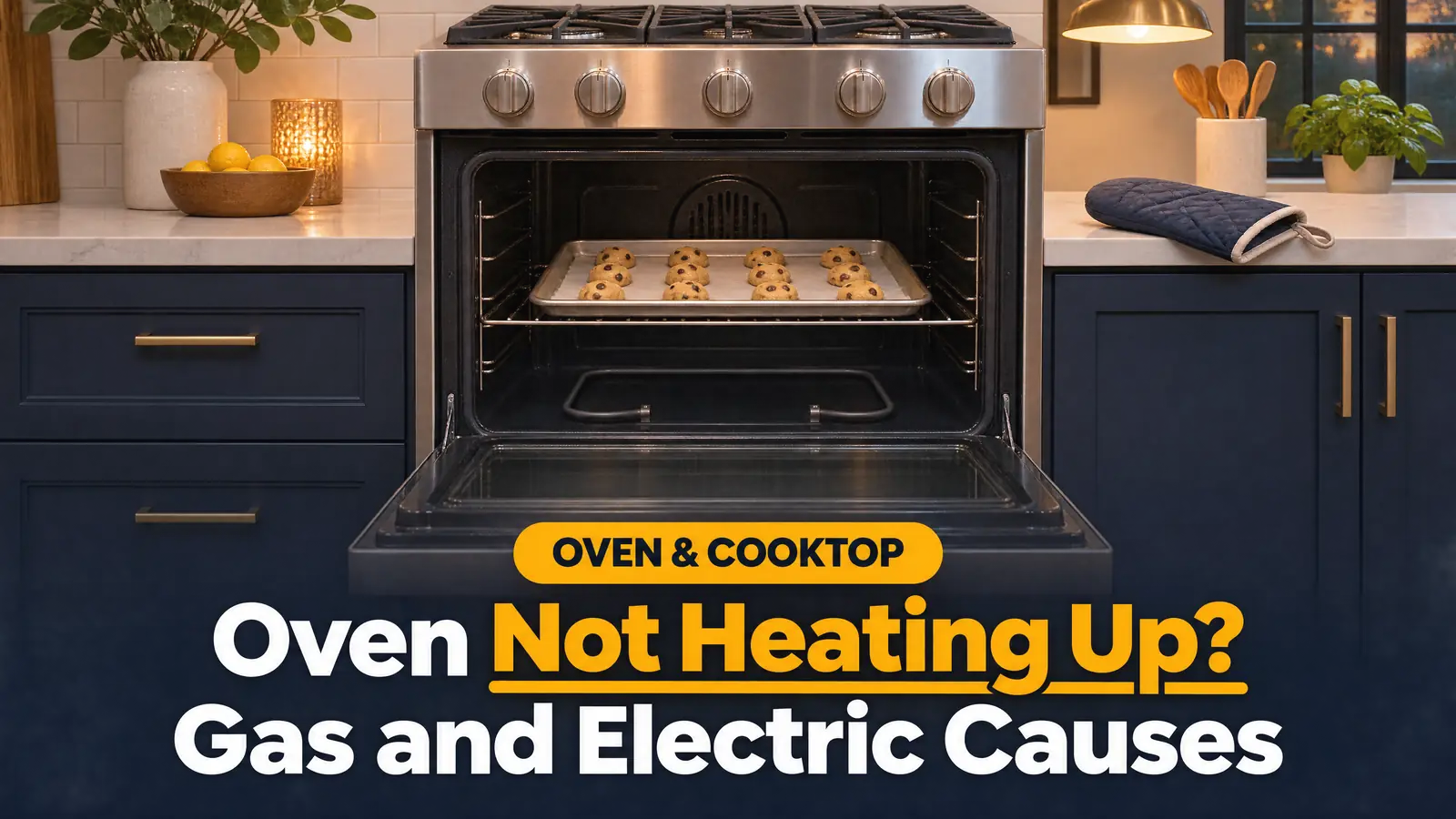
An oven not heating up usually has one of three causes: a failed bake element on an electric oven, a weak igniter on a gas oven, or a power or gas supply problem the stove top doesn’t share. Settings catch people too, like Demo mode or a knob put back in the wrong spot after cleaning. Below are the checks in the order a technician runs them, what each cause costs to fix, and where to stop and book a repair.
Quick answer
- Electric oven: turn the breaker off and look at the bake element on the oven floor. A blister, crack or break means it needs replacing.
- Gas oven: open the door after you turn it on and look for the igniter’s orange glow. No glow points to the igniter, the control or wiring.
- Gas oven that glows but never lights: the igniter has usually weakened. That’s a technician repair.
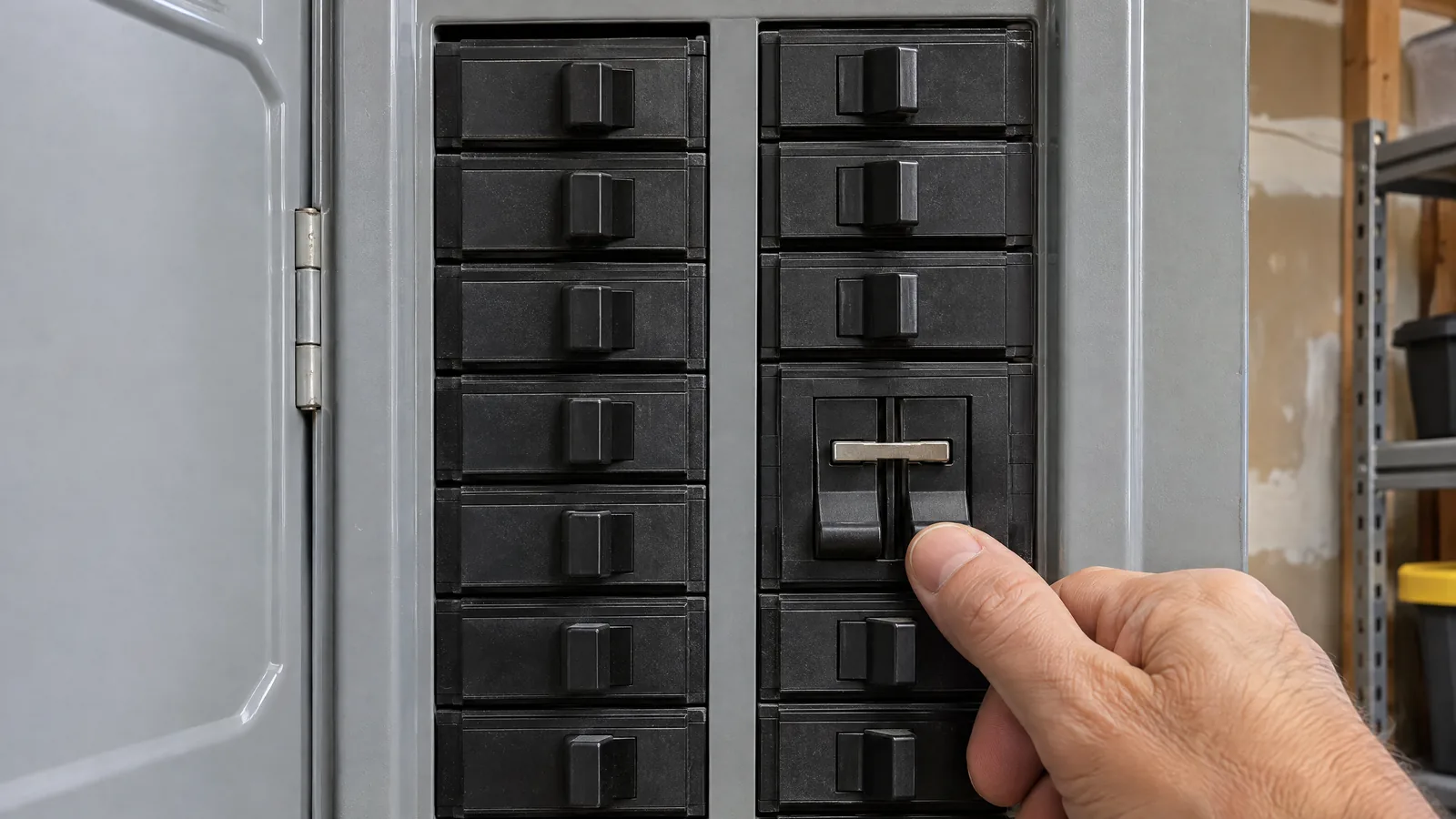
- Switch the range breaker fully off for 30 seconds and back on. A tripped breaker can look like it’s still on.
- Smell gas? Don’t troubleshoot. Leave the house and call 911 and the gas utility from outside.
Check these first (no tools)
- Check the mode and knobs. GE says to make sure the oven is set to Bake or Broil, and if the knobs were pulled off for cleaning, that each went back on its own stem. A temperature knob on the function stem will turn the oven to the wrong setting.
- Look for Demo mode. Samsung ranges in Demo mode show “tESt”, a “d” or a “D” icon, and the oven won’t heat at all. Your manual explains how to turn it off.
- Check the door. On self-clean ranges with a manual latch, the latch must be all the way in the open position. Samsung ovens also shut off if the door is left open too long, as a safety feature.
- Reset the breaker. Switch the range breaker off for 30 seconds and back on. Samsung notes that a tripped breaker can look like it hasn’t tripped.
- Gas range: light a burner. If no burner lights, the gas may be off to the house. If the burners light and the oven doesn’t, keep reading.
Safety first
- Turn off the range breaker (and unplug it if you can reach the plug) before you touch any element, igniter or wire. GE’s own steps start this way.
- Let the oven cool completely before you reach inside.
- If you smell gas, don’t switch anything on or off. Leave and call 911, then the gas company. Florida’s Peoples Gas tells customers to leave the area and call 911 before calling the utility.
- Never adjust or remove a gas valve, regulator or gas line yourself, and never bypass a thermal fuse or safety switch.
Why is my electric oven not heating up but the stove works?
When the cooktop works and the oven doesn’t, the power is reaching the range, so the problem is in the oven’s own circuit: most often the bake element, then the temperature sensor, a thermal fuse or the control board. The bake element is the first suspect and the only one you can check by eye.
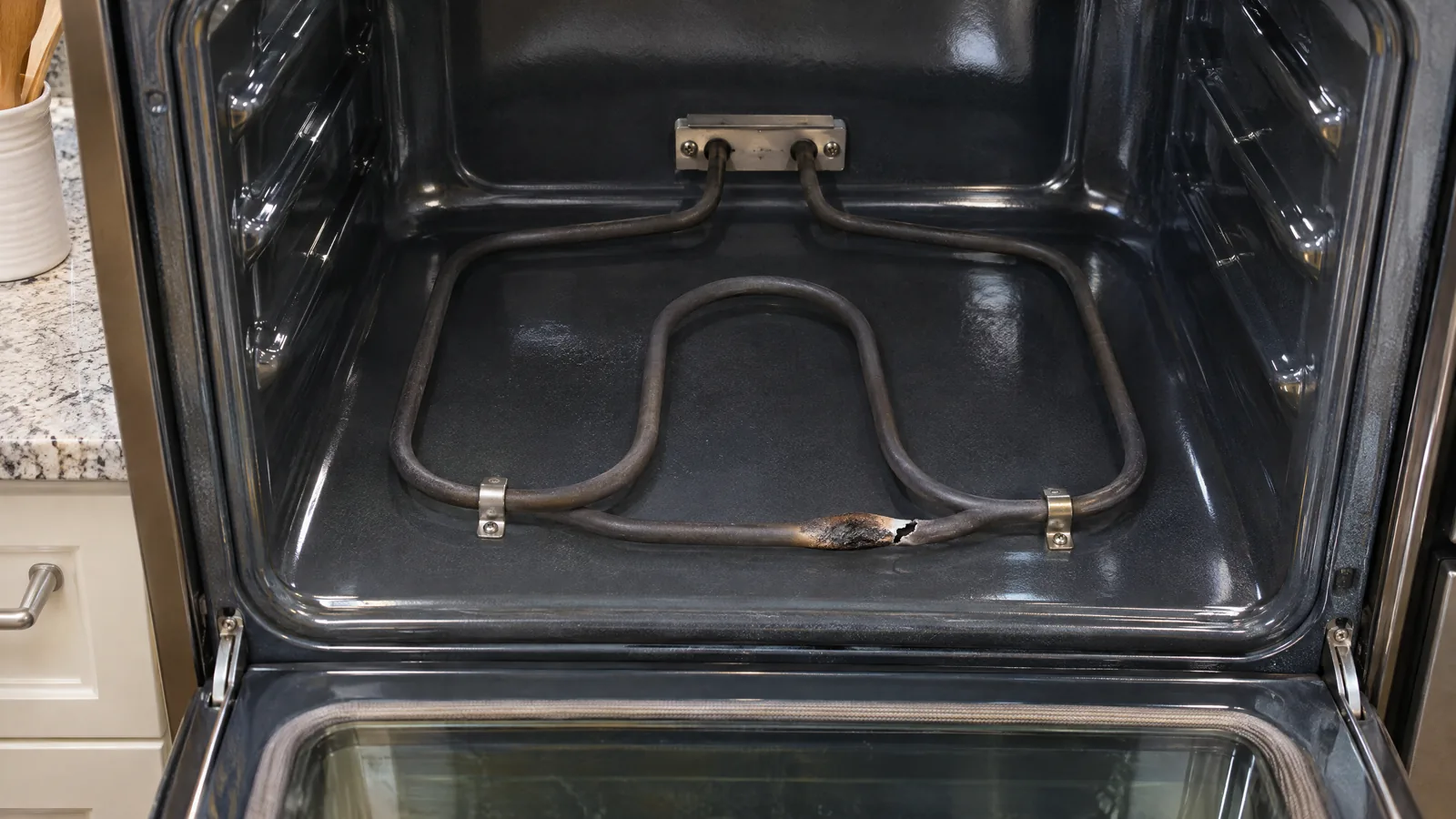
1. Bake element (most common on electric ovens)
How to tell: set the oven to Bake at 350°F and watch the lower element. Within a few minutes it should glow red along its whole length. (If your oven hides the element under a smooth floor, skip to the breaker and preheat checks.) If the broil element on top heats but the bottom one stays dark, the bake element is the prime suspect. Then turn the breaker off and look closely. GE’s guide for electric ranges says to inspect the lower element for cracks or breaks and replace it if you find one.
Fix / who fixes it: a bake element is a common, affordable repair. HomeGuide puts a heating element replacement at $150 to $450 installed, and Fixr lists a broken bake element at $100 to $300. Some homeowners swap it themselves with the power off; if the wires behind the oven’s back wall are burnt or the terminals are loose, leave it to a technician.
2. Temperature sensor
How to tell: the oven heats but stops early, overshoots, or never reaches temperature, and the display may show an error code. The sensor is the thin metal probe on the upper back wall. It’s a quick part swap, but confirming it needs a meter, so it’s usually diagnosed by a technician. Sensor replacement runs about $100 to $250 in both cost guides.
3. Thermal fuse or control board
How to tell: nothing heats on bake or broil, the display works, and the breaker is fine. A thermal fuse can open after an overheat, and a control board can fail after a power surge. Both need testing inside the range with a meter, and a blown fuse also means finding out why it overheated. Don’t bypass it.
Is the breaker really fine?
An electric range runs on 240 volts through a double breaker. Samsung notes that a range can still run on lower voltage but takes longer to preheat, and that a tripped breaker can look like it’s on. If the cooktop, lights and display work but neither oven element heats, switch the range breaker fully off and back on before you book anything.
Why is my gas oven not heating up but the burners work?
The burners and the oven share the gas line, but the oven has its own igniter and safety valve. If the burners light, gas is reaching the range. That leaves the igniter (most common), the regulator setting on a newly installed range, gas pressure, or the oven control.
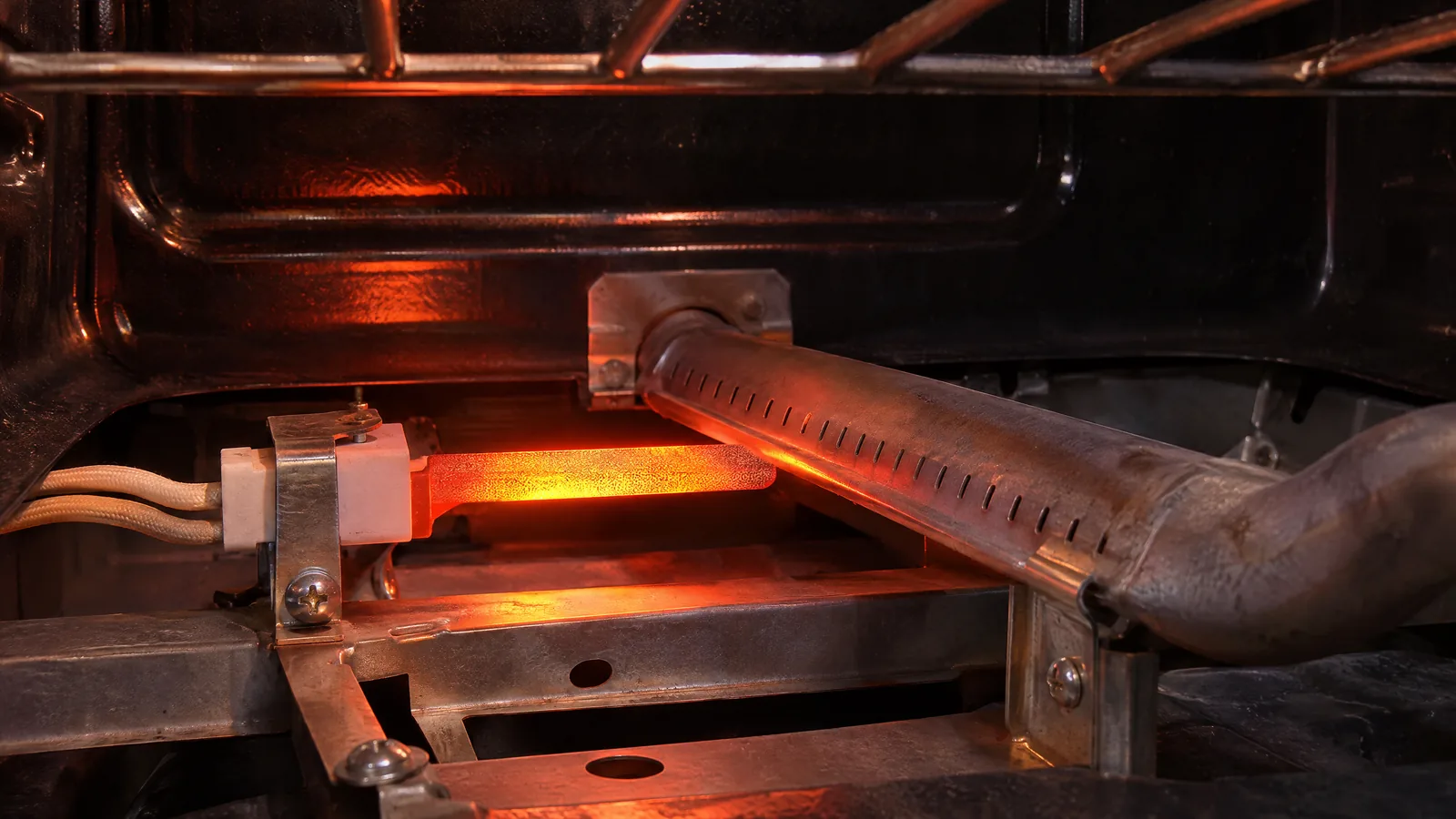
1. Igniter (most common on gas ovens)
How to tell: turn the oven on, open the door and look through the slots in the oven floor. GE says to look for a red glow; if there isn’t one, the igniter, the control or other electrical parts have failed. If it glows but no flame appears after a minute or so, the igniter is usually worn: the glow bar also acts as the switch that opens the gas valve, and a weak one glows without passing enough current to open it.
Fix / who fixes it: a technician. The igniter sits next to the gas burner and valve, so this isn’t a homeowner job. HomeGuide puts igniter replacement at $150 to $325; Fixr’s part table lists $200 to $350.
2. Regulator switched off (new installs)
GE says the range’s main gas regulator usually ships in the ON position, but it can spring to OFF if it’s bumped during installation. The burners still work with it off; the oven doesn’t. If your range was just installed or moved, call the installer or a technician to check it.
3. Gas pressure
Samsung’s test: if the oven heats only while a cooktop burner is lit, the gas pressure is too high, and you should contact the installer or the gas company. If it doesn’t heat with a burner lit either, the oven needs service.
4. Safety valve or control
If the igniter tests good and the oven still won’t light, the oven safety valve or the control board is next. Both are technician repairs. HomeGuide lists a gas oven safety valve at $150 to $400 and a control board at $150 to $600.
If you’ve done the first checks and the element is dark or the igniter won’t light the burner, that’s where DIY ends. A Caspi Home Service technician can test the part and give you a firm price before any work starts. See our oven repair service, or our GE and Samsung appliance repair pages.
Oven heats but not to the right temperature
An oven that heats slowly or runs cool is a different problem from one that stays cold. Samsung gives a simple preheat test: with the oven empty, at room temperature and one rack inside, set it to 350°F and time it. It should signal that it’s preheated within 20 minutes. Don’t open the door during the test.
Don’t judge it by an oven thermometer alone. Samsung explains that an oven set to 350°F normally swings between about 330°F and 370°F as it cycles, and many ovens let you calibrate the temperature by up to 35°F in either direction. If recipes come out underdone after calibrating, or preheat takes far longer than 20 minutes, have the sensor and element tested.
Symptom table: what it points to
| What you see | Likely cause | Try first | Who fixes it |
|---|---|---|---|
| Electric: broil heats, bake doesn’t | Bake element | Breaker off, look for a break or blister | Technician or handy homeowner |
| Electric: display on, nothing heats | Breaker, thermal fuse or control | Reset the breaker for 30 seconds | Technician |
| Gas: no glow at the igniter | Igniter, control or wiring | Check mode, knobs and breaker | Technician |
| Gas: glows, never lights | Weak igniter | Nothing safe to try | Technician |
| Gas: heats only with a burner on | Gas pressure too high | Call installer or gas company | Installer or gas company |
| New range: burners work, oven doesn’t | Regulator in OFF position | Call the installer | Installer or technician |
| Display shows tESt or a D icon | Demo mode (Samsung) | Turn Demo mode off per the manual | You |
| Slow preheat, food underdone | Sensor, element, low voltage | 20-minute preheat test, calibrate | Technician if it fails |
What does it cost to fix an oven that won’t heat?
Most “won’t heat” repairs are a single part. Prices include parts and labor and vary by brand and model:
| Repair | HomeGuide | Fixr |
|---|---|---|
| Bake or heating element | $150 to $450 | $150 to $400 |
| Gas igniter | $150 to $325 | $200 to $350 |
| Temperature sensor | $100 to $250 | $100 to $250 |
| Thermostat | $100 to $350 | $110 to $340 |
| Control board | $150 to $600 | $200 to $600 |
| Thermal fuse | $100 to $250 | Not listed |
Sources: HomeGuide oven repair cost and Fixr oven repair cost, checked November 2026.
Worked example: repair or replace?
- A gas range bakes fine on the burners but the oven glows and never lights: a worn igniter, about $150 to $350 installed per the guides above.
- HomeGuide puts a replacement oven at $700 to $1,600. Even at the top of the igniter range, the repair is well under half the cost of a new oven.
- Where the math tips is a control board on an old range that has other problems. Our appliance repair cost guide walks through that decision.
After a storm in Florida and South Carolina
Outages and surges are part of life here during summer storms and the Atlantic hurricane season, June 1 to November 30. Two things to know about ovens:
- Electronic controls are the weak point. Ready.gov warns that power can return with momentary surges or spikes that can cause damage, and advises disconnecting appliances during an outage. If you can reach the range’s plug, unplug it; otherwise switch its breaker off until power is steady. An oven with a blank or frozen display after a storm, or one that beeps but won’t heat, often needs the control board checked.
- Gas after a storm. If the gas company shut off service, every burner and the oven stay dark until it’s restored. If you smell gas at any point, leave first and call from outside.
Frequently asked questions
Why is my oven not heating up but the stove works?
The cooktop and oven have separate heating parts. On an electric range it’s usually the bake element, then the sensor, a thermal fuse or the control. On a gas range it’s usually the igniter, or on a new install, the gas regulator left in the OFF position. Check the mode, knobs and breaker first.
How do I know if my oven igniter is bad?
Turn the oven on and look through the floor slots. No glow at all points to the igniter, control or wiring. A glow that lasts a minute or more without lighting the burner usually means the igniter is too weak to open the gas valve. Either way, a technician should replace it.
Why is my oven not heating up all the way?
Run Samsung’s preheat test: empty oven, one rack, 350°F, door closed. It should finish within 20 minutes. If it does, the oven may only need calibrating. If it’s much slower, the bake element, temperature sensor or low voltage at the outlet is likely.
Can a power outage stop an oven from heating?
Yes. A surge when power returns can damage the electronic control board, and a tripped breaker may look like it’s still on. Reset the range breaker for 30 seconds first. If the display is blank or the oven still won’t heat, have the control tested.
Is it worth fixing an oven that won’t heat?
Usually. Elements, igniters and sensors are single-part repairs that cost a fraction of a new oven. Replacement makes more sense when the control board fails on an older range that has other problems too.
Oven still cold?
Book a Caspi Home Service technician for gas and electric ovens. Same-day and next-day appointments are available, with a free estimate when you book online and no service-call fee.
Sources
- GE Appliances: Electric Range – Oven Doesn’t Heat But Burners Do Heat
- GE Appliances: Gas Range – Oven Does Not Heat, But The Burners Heat
- Samsung US: Samsung oven temperature issues
- HomeGuide: How Much Does Oven Repair Cost?
- Fixr: Oven Repair Cost
- Peoples Gas: Safety
- National Hurricane Center: Tropical Cyclone Climatology
- Ready.gov: Power Outages