
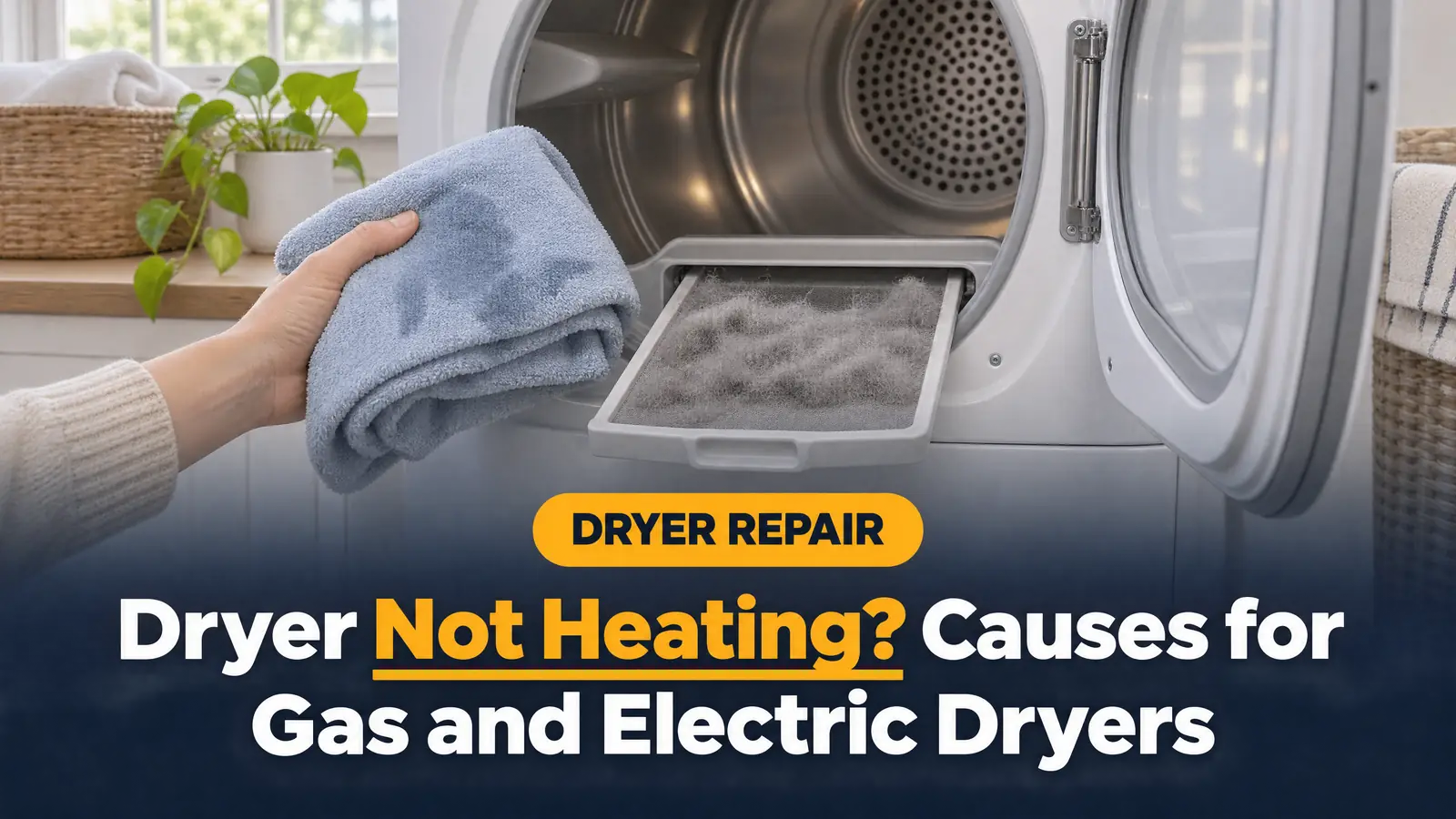
A dryer that tumbles but won’t heat usually has a tripped or half-tripped breaker, a closed gas valve, the wrong cycle selected, or a blown thermal fuse. On electric dryers the heating element is the next suspect; on gas dryers it’s the igniter or the gas valve coils. This guide covers the free checks first, then each part, how a technician tests it, and what the repair costs.
Quick answer
- Run an empty heated timed cycle for 5 minutes, then feel inside. That’s the test Whirlpool recommends before anything else.
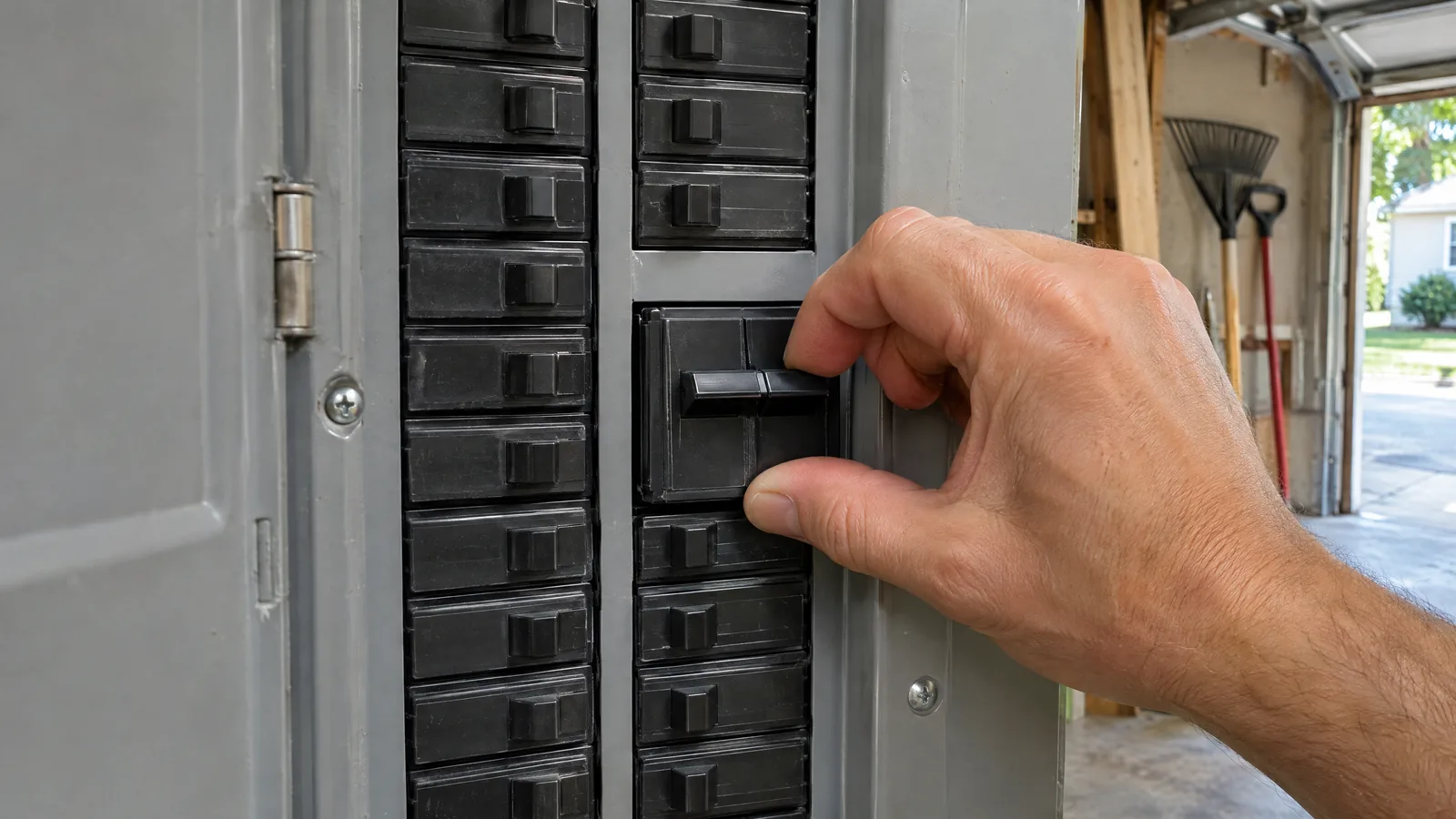
- Electric dryer: check both breakers. A half-tripped breaker lets the drum turn on 120 volts while the element, which needs 240, stays cold.
- Gas dryer: the drum turns but nothing heats if the gas shutoff valve is closed. Open is when the handle is parallel to the pipe.
- Most common failed parts: thermal fuse ($75 to $150 replaced), heating element ($150 to $350) or gas igniter ($100 to $250), per HomeGuide.
- A blown thermal fuse almost always means the vent is restricted. Clean the vent or the new fuse will blow too.
Check these first (no tools)
Do these before anyone opens a panel. They fix a fair share of “no heat” calls and cost nothing.
- Confirm it really isn’t heating. Whirlpool’s product help says to select a heated timed cycle, run it empty for 5 minutes, then open the door and feel inside. If it’s warm, your problem is slow drying (airflow), not heat.
- Check the cycle. Air Only and Air Fluff cycles never add heat, and neither does a cool-down setting. GE Appliances also lists the wrong fabric or temperature selection as a cause.
- Electric dryer: reset both breakers. An electric dryer uses a 30-amp circuit with two breakers, one feeding the motor and one feeding the heating element, per Whirlpool. GE warns a breaker can be partially tripped even when it doesn’t look tripped. Switch the dryer’s breaker fully off, then back on.
- Gas dryer: check the gas valve. Whirlpool and Maytag both say the drum of a gas dryer turns but won’t heat if the shutoff valve is closed. The valve is open when its handle runs parallel to the gas pipe. If someone moved the dryer recently, this is the first thing to look at.
- Clean the lint screen and look at the vent hood outside. With the dryer running, you should feel strong airflow at the outside hood. Weak or no airflow means a clogged or crushed duct.
Safety first
- Unplug the dryer (or switch off its breaker) before you pull it out from the wall, touch the power cord terminal block or remove any panel.
- On a gas dryer, don’t disconnect or tighten the gas line yourself. If you smell gas, don’t touch switches or start the dryer. Leave the house and call your gas utility or 911 from outside.
- Never bypass or jumper a thermal fuse or thermostat to “test” the dryer. Those parts exist to stop a fire.
Why is my dryer running but not heating?
If the drum turns and the breakers and settings are fine, a part in the heat circuit has failed. On most dryers that’s the thermal fuse, the heating element (electric) or the igniter (gas), in roughly that order. A technician tests each one with a meter, with the dryer unplugged, before replacing anything.
1. Blown thermal fuse (gas and electric)
The thermal fuse is a small one-time safety device on the blower housing or the heat source. When the dryer overheats, it opens and stays open. HomeGuide notes it can’t be reset or repaired, only replaced, and that a blocked vent typically causes it to blow. Depending on the model, a blown fuse either kills the heat or stops the dryer from running at all.
How to tell: the dryer ran hot and slow for weeks, then stopped heating. Fix: new fuse plus a vent cleaning. HomeGuide puts the replacement at $75 to $150.
2. Failed heating element (electric dryers)
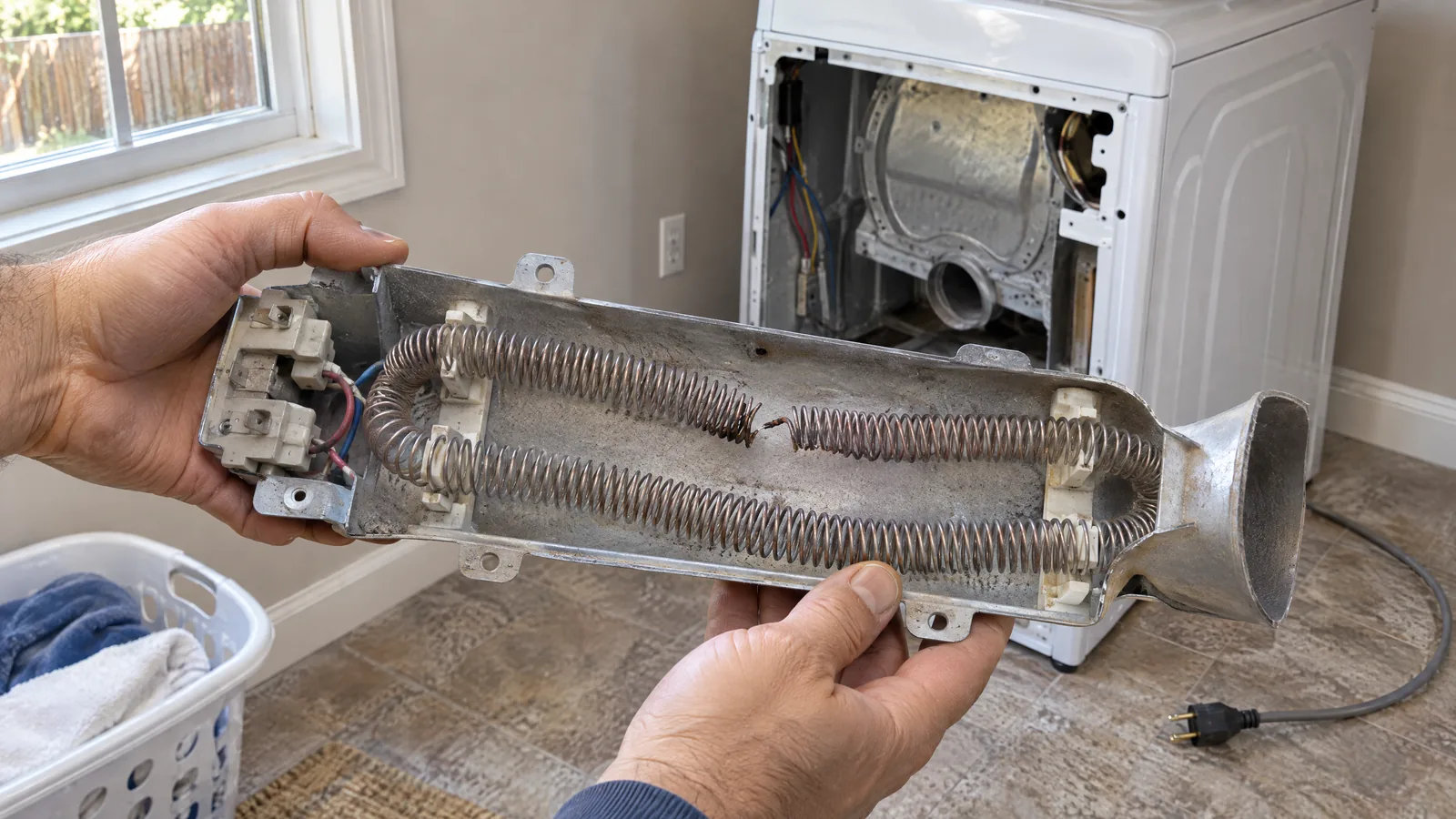
The element is a coil of resistance wire inside a metal housing. Over time the coil breaks or touches the housing and shorts. HomeGuide says elements burn out after overheating from power surges, blocked vents or circuit failures.
How to tell: breakers are fine, the drum turns, the air stays cold on every heat setting. A meter shows no continuity across the element. Fix: replace the element (HomeGuide: $150 to $350; Fixr: $150 to $250), and find out why it failed.
3. Bad igniter (gas dryers)
A gas dryer’s igniter glows bright orange to light the burner. When it cracks or weakens, it either doesn’t glow or doesn’t get hot enough to open the gas valve.
How to tell: through the burner sight hole a technician sees no glow, or a glow that never lights the flame. Fix: replace the igniter. HomeGuide puts it at $100 to $250.
4. Gas valve coils (gas dryers)
The valve has small solenoid coils that open it once the igniter is hot. Weak coils cause the classic pattern: the dryer heats for a few minutes, the flame goes out, and it won’t relight until the dryer cools.
How to tell: the igniter glows, then goes out without lighting the burner. Fix: replace the coil set (HomeGuide lists coils at $100 to $200). This is gas work, so it’s a technician job.
5. Cycling or high-limit thermostat
Dryers can have two thermostats: one that cycles the heat to hold the set temperature, and a high-limit that cuts the heat if the dryer runs too hot. HomeGuide says they often fail from overheating, and a failed one means the dryer won’t heat or runs dangerously hot. Replacement runs $100 to $300.
6. Power cord or terminal block (electric dryers)
GE says to check the power cord where it connects to the terminal block on the back of the dryer: burned, broken, frayed or loose wires mean both the cord and the terminal connections need replacing. Whirlpool adds that the terminal screws should be tight, and to unplug the dryer before checking them. A scorched terminal block is also a fire risk, so stop using the dryer if you see one.
7. Control board or timer
Less common, but possible after an electrical surge. HomeGuide lists a control board at $250 to $500 installed and a timer at $120 to $300. A technician checks this last, after the fuse, heat source and thermostats test good.
Once you’ve reset the breakers, checked the gas valve and cycle, and confirmed the vent blows freely, the rest needs a meter and the dryer’s wiring diagram. That’s the point to book a dryer repair online.
Dryer not heating: symptom table
| What you see | Likely cause | What you can check | Who fixes it |
|---|---|---|---|
| Drum turns, no heat at all, electric dryer | Half-tripped breaker, thermal fuse, heating element | Reset both breakers, check the cycle | You (breaker); technician (parts) |
| Drum turns, no heat, gas dryer | Closed gas valve, thermal fuse, igniter | Valve handle parallel to the pipe | Technician for anything past the valve handle |
| Heats a few minutes, then goes cold (gas) | Weak gas valve coils | Nothing safe to check | Technician |
| Heat stopped after weeks of long dry times | Blocked vent blew the thermal fuse | Airflow at the outside hood | Vent cleaning plus a technician for the fuse |
| Warm but clothes still damp | Restricted vent or overloaded drum | Lint screen, vent hood, smaller loads | You or a vent cleaner |
| Runs very hot, or a burning smell | Failed cycling thermostat, lint buildup | Stop using it and unplug it | Technician |
| Not heating after a new heating element | Thermal fuse or thermostat also open, or a vent problem that wasn’t fixed | Vent airflow | Technician |
The vent: why “no heat” keeps coming back
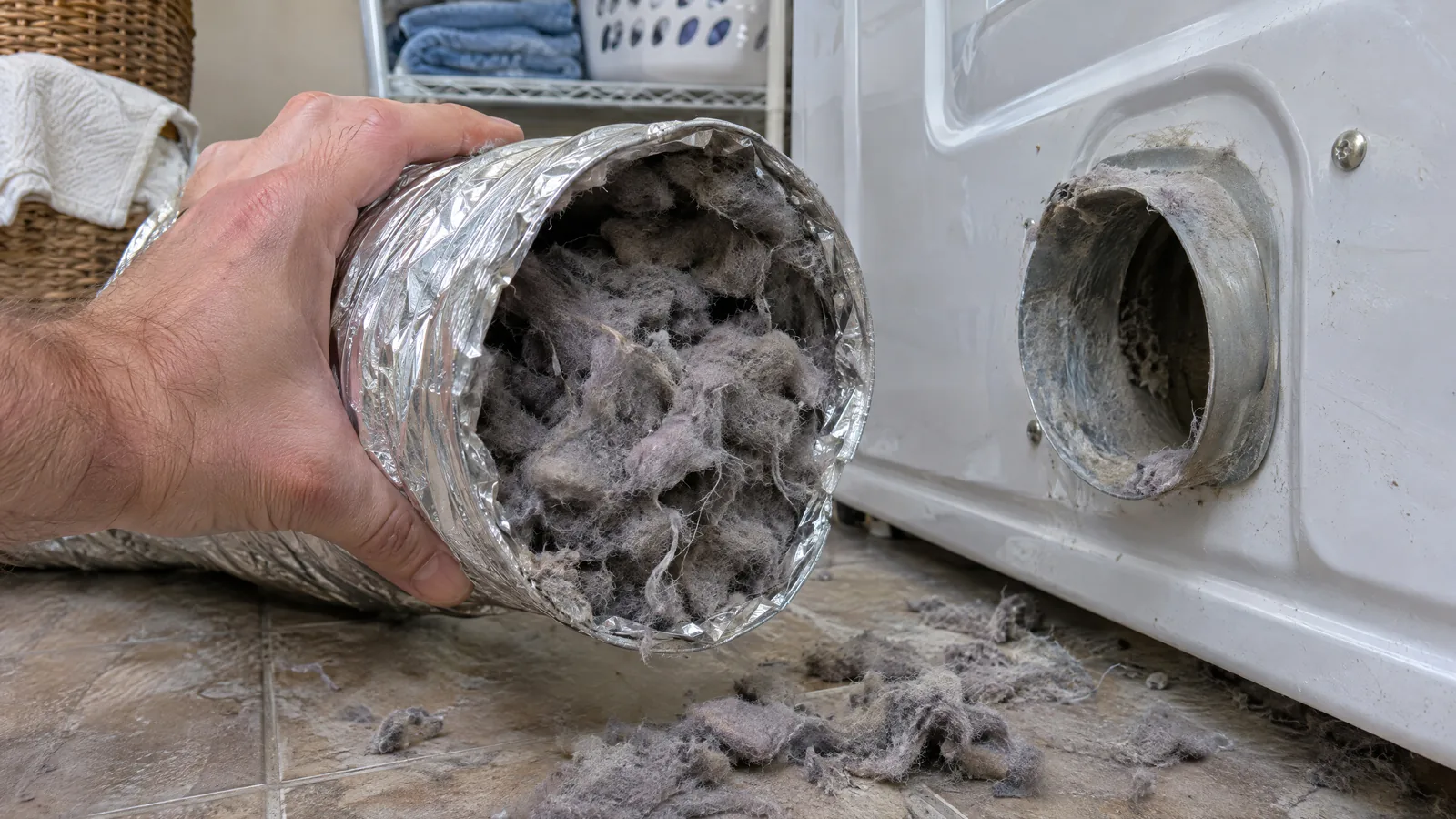
A restricted vent makes the dryer run hot inside while drying slowly. The heat builds up until the thermal fuse or high-limit thermostat trips. Replace the fuse without clearing the vent and you’ll be back where you started, sometimes within weeks.
It’s also a fire issue. The U.S. Fire Administration found failure to clean was the leading factor in home clothes dryer fires from 2018 to 2020, at 31%. Whirlpool says the vent from the dryer to the outside should be cleaned every one to two years, or sooner if drying slows down. Our guide on how to clean out a dryer vent walks through it.
What does it cost to fix a dryer that won’t heat?
HomeGuide puts dryer repair at $100 to $300 on average and a new dryer at $800 to $1,200 for the unit alone. Here are the parts that cause no-heat problems:
| Repair | HomeGuide (installed) | Fixr |
|---|---|---|
| Thermal fuse | $75 to $150 | Not listed separately |
| Heating element (electric) | $150 to $350 | $150 to $250 |
| Igniter (gas) | $100 to $250 | Not listed separately |
| Gas valve coils | $100 to $200 | Not listed separately |
| Thermostat | $100 to $300 | Not listed separately |
| Control board | $250 to $500 | Not listed separately |
| Dryer vent cleaning | $80 to $185 | Not listed separately |
National ranges from the linked sources; your price depends on the model and the part. Fixr also puts electric dryer repairs at $50 to $400 and gas dryer repairs at $100 to $450.
HomeGuide’s advice is to replace a dryer when it’s more than 6 to 10 years old and needs frequent repairs. A $100 fuse on an 8-year-old dryer that’s otherwise fine is still worth doing; a control board plus a drum on the same dryer probably isn’t.
Florida and South Carolina: storms, outages and surges
The Atlantic hurricane season runs June 1 to November 30 (National Hurricane Center), and both states see frequent summer storms and outages. Ready.gov warns power may come back with momentary surges that can damage equipment and advises disconnecting appliances. For a dryer that means two things:
- After any outage, reset the dryer’s breaker before calling for service. A storm can leave one side of the double breaker tripped, which gives you the classic “runs but no heat”.
- Unplug the dryer or switch off its breaker during an outage. HomeGuide lists power surges among the causes of burned-out heating elements, and a control board is one of the pricier dryer repairs.
Storm season is also a good time to look at the vent. Whirlpool recommends cleaning it every one to two years; do it sooner if loads start taking longer, because a dryer that runs hot and slow is the one that blows its thermal fuse.
Frequently asked questions
Why did my dryer stop heating all of a sudden?
A sudden stop usually means a one-time part opened: a thermal fuse, a heating element coil or a gas igniter. Before calling, reset both dryer breakers and, on a gas dryer, confirm the valve handle is parallel to the pipe. If the dryer had been drying slowly for a while before it quit, the vent likely caused it.
Can a dryer run but not heat because of the breaker?
Yes. Whirlpool explains that an electric dryer uses two breakers, one for the motor and one for the heating element, and GE says the dryer can run on partial 120-volt power without heating. A breaker can be partly tripped without looking it. Switch it fully off and back on.
Why is my dryer not heating after replacing the heating element?
The element often fails because something else did. A blown thermal fuse, an open high-limit thermostat or a clogged vent can all keep a new element cold or burn it out again. A technician tests the whole heat circuit with the dryer unplugged, and the vent should be cleared at the same visit.
Gas dryer not heating but the igniter works: what’s wrong?
If the igniter glows but the burner never lights, or the flame lights and drops out after a few minutes, the gas valve coils are the usual suspect. HomeGuide lists coil replacement at $100 to $200. Because it involves the gas valve, leave it to a technician.
Can I reset a dryer thermal fuse?
No. HomeGuide notes a thermal fuse can’t be reset or repaired; replacement is the only fix, at about $75 to $150 installed. Never bypass it. And since a blocked vent is the usual reason it blew, clean the vent when the fuse is replaced.
Is it worth fixing a dryer that won’t heat?
Usually, yes. The common no-heat parts (fuse, element, igniter) cost $75 to $350 installed according to HomeGuide, against $800 to $1,200 for a new dryer. It’s less worth it on a dryer past 10 years that needs several parts at once.
Dryer still cold? We’ll find the part
Caspi Home Service repairs gas and electric dryers across Florida and South Carolina, including Whirlpool, Maytag and GE. Same-day and next-day appointments, no service-call fee when you book, a clear price before work starts, and a 90-day parts-and-labor warranty.
Sources
- Whirlpool Product Help: Dryer is Not Heating
- Maytag Product Help: Checking the Gas Supply and the Shutoff Valve
- GE Appliances: Electric Dryer Runs But Does Not Heat
- U.S. Fire Administration: Appliance and Electrical Fire Safety
- HomeGuide: Dryer Repair Cost
- Fixr: Dryer Repair Cost
- Ready.gov: Power Outages
- National Hurricane Center: Tropical Cyclone Climatology