Most major home appliances last about 9 to 15 years. In the National Association of Home Builders and Bank of America study of home components, a dishwasher averaged 9 years, a washer 10, a refrigerator and a dryer 13 each, and a range 13 to 15. How long yours lasts depends far more on cleaning, water quality and how you treat it after a breakdown than on the label.
Below: a lifespan chart from three sources, what wears out first in each appliance, the maintenance that adds years, and the repair-or-replace math a technician uses at your kitchen counter.
Quick answer
- Typical lifespans (NAHB study): dishwasher 9 years, washer 10, refrigerator 13, dryer 13, garbage disposal 12, range 13 to 15.
- Cost guides give wider ranges: HomeGuide lists refrigerators at 10 to 20 years and dishwashers at 8 to 15.
- Most breakdowns before year 10 are one worn part (a fan motor, pump, belt, heating element or igniter), not the end of the appliance.
- Rule of thumb: when an appliance is past about 10 years or the repair costs more than half the price of a new one, replacing usually makes more sense.
- Dusty condenser coils, old fill hoses, lint and hard-water scale are what shorten appliance life most often.
Appliance lifespan chart: what three sources say
No single study tracks every appliance brand today, so the honest answer is a range. The table puts the most quoted numbers side by side: the NAHB and Bank of America Home Equity study, the NAHB figures Fannie Mae printed in its 2008 landlord guide, and the current ranges in HomeGuide’s cost guides.
| Appliance | NAHB / Bank of America study | NAHB figures (Fannie Mae, 2008) | HomeGuide range |
|---|---|---|---|
| Refrigerator | 13 years | Not listed | 10 to 20 years |
| Standalone freezer | Not listed | 16 years | Not listed |
| Washing machine | 10 years | 13 years | 8 to 13 years |
| Dryer | 13 years | 14 years | 8 to 13 years |
| Dishwasher | 9 years | 10 years | 8 to 15 years |
| Range or oven | 13 to 15 years | Built-in electric 17, built-in gas 14 | Replace when 10 to 20+ years old |
| Garbage disposal | 12 years | Not listed | Not listed |
ENERGY STAR uses a 12-year lifetime when it works out the savings from a new certified refrigerator, which sits right in the middle of these numbers. Treat every figure as an average: some units fail at 6 years, and plenty of well-kept refrigerators and ranges run past 20.
Do appliances last as long these days?
Probably a bit less than the older charts suggest, but nobody has clean proof. The NAHB numbers come from studies published in 2007 and 2008, before most homes had electronic control boards in every appliance. Newer machines carry more electronics: more parts that can fail, but each one replaceable on its own.
What a technician sees in practice: an appliance rarely just “dies of old age.” It stops because one part failed, and whether that’s the end depends on which part and how old everything else is. A 6-year-old washer with a dead drain pump is a repair. A 14-year-old refrigerator with a failed compressor usually isn’t.
How long does a refrigerator last?
About 13 years on average in the NAHB study, with HomeGuide giving a wider 10 to 20 years for a well-maintained fridge. Built-in units and simple top-freezer models tend to sit at the long end; models with ice makers, dispensers and several electronic controls have more parts that can quit early.
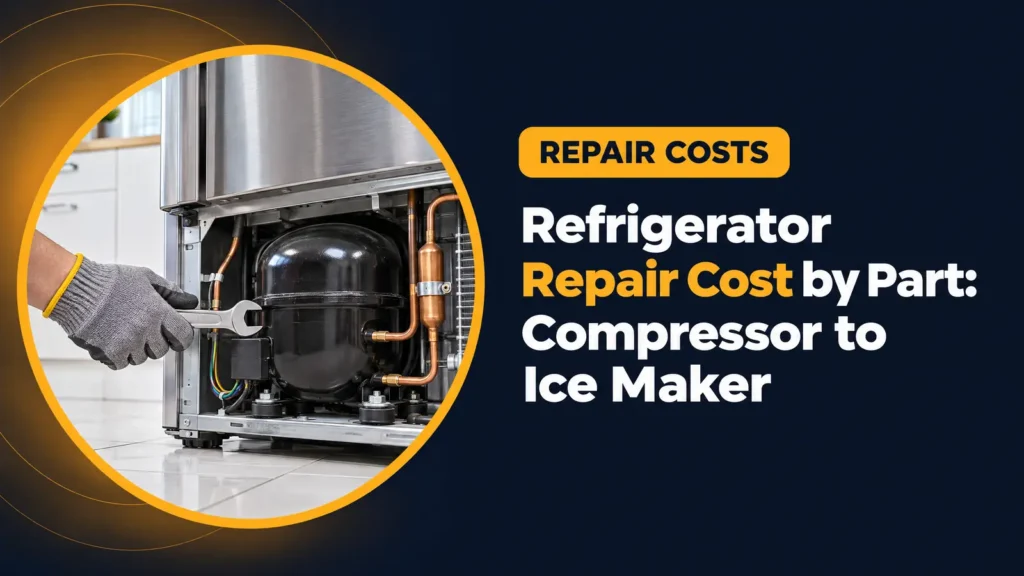
What wears out first: the evaporator and condenser fan motors, the defrost heater or thermostat, the ice maker, water inlet valves and door gaskets. The compressor is the expensive one, and it usually fails because it was overworked for years by dirty coils or poor airflow. Our guide to signs of a failing refrigerator compressor covers how to tell a compressor problem from a cheaper part.
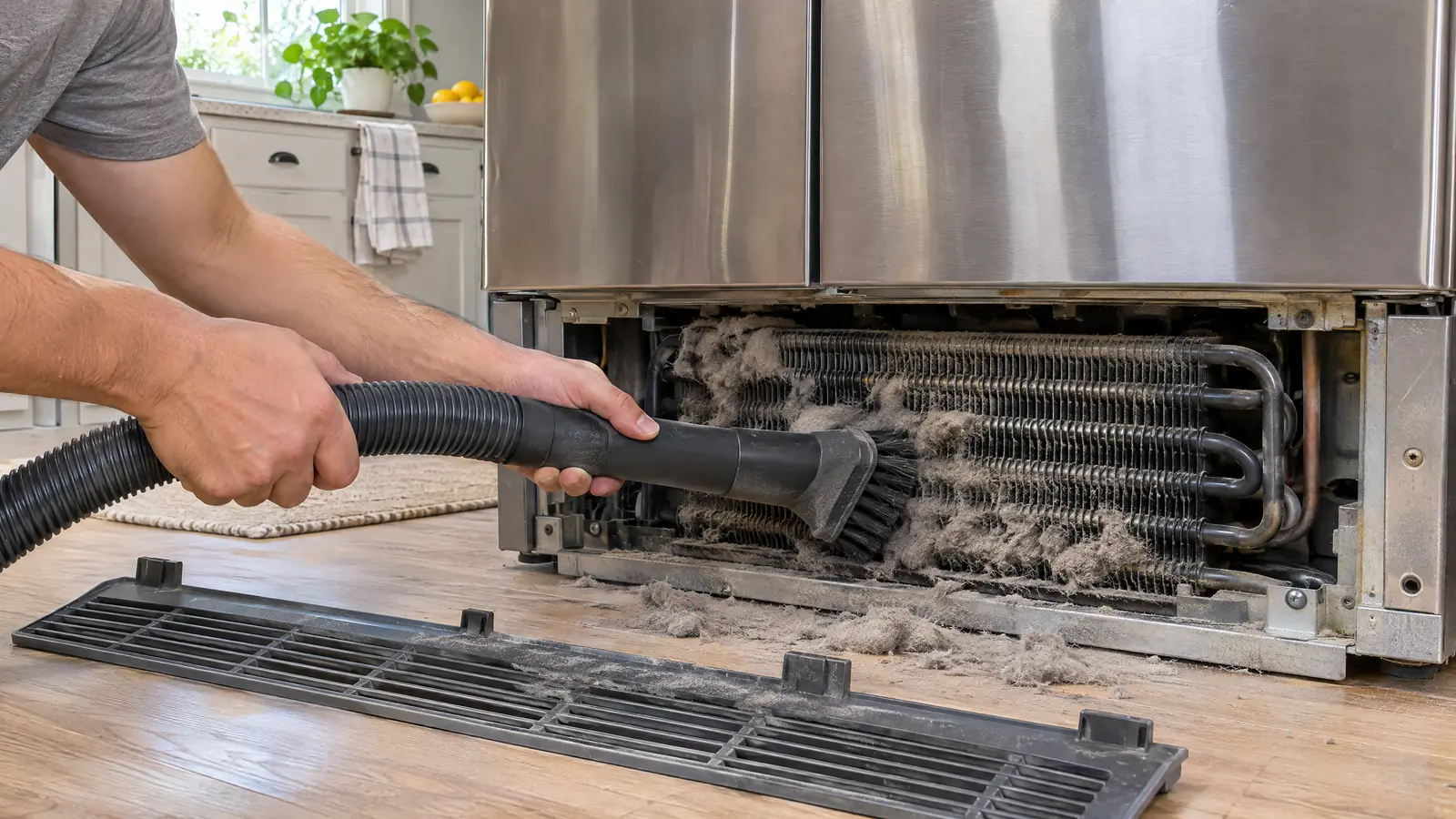
HomeGuide’s refrigerator guide recommends vacuuming the condenser coils every 6 months and checking door gaskets every 4 months, along with changing water and air filters on schedule. It also notes a fridge more than 10 years old can cost up to $20 a month to run, compared with $3 to $8 for a typical model.
How long does a washing machine last?
Roughly 10 to 13 years. The NAHB study put washers at 10, the Fannie Mae table at 13, and HomeGuide says 8 to 13 years depending on brand, use and maintenance. A family running a load or two every day reaches the end of that range years before a single person does.
What wears out first: drain pumps (often from coins and hair pins), lid or door locks, suspension springs and shock absorbers, drive belts, and the door boot seal on front-loaders. Bearings are the big one: a loud roar during spin usually points to worn tub bearings, and on many washers that job means replacing the outer tub, so get a quote before deciding.
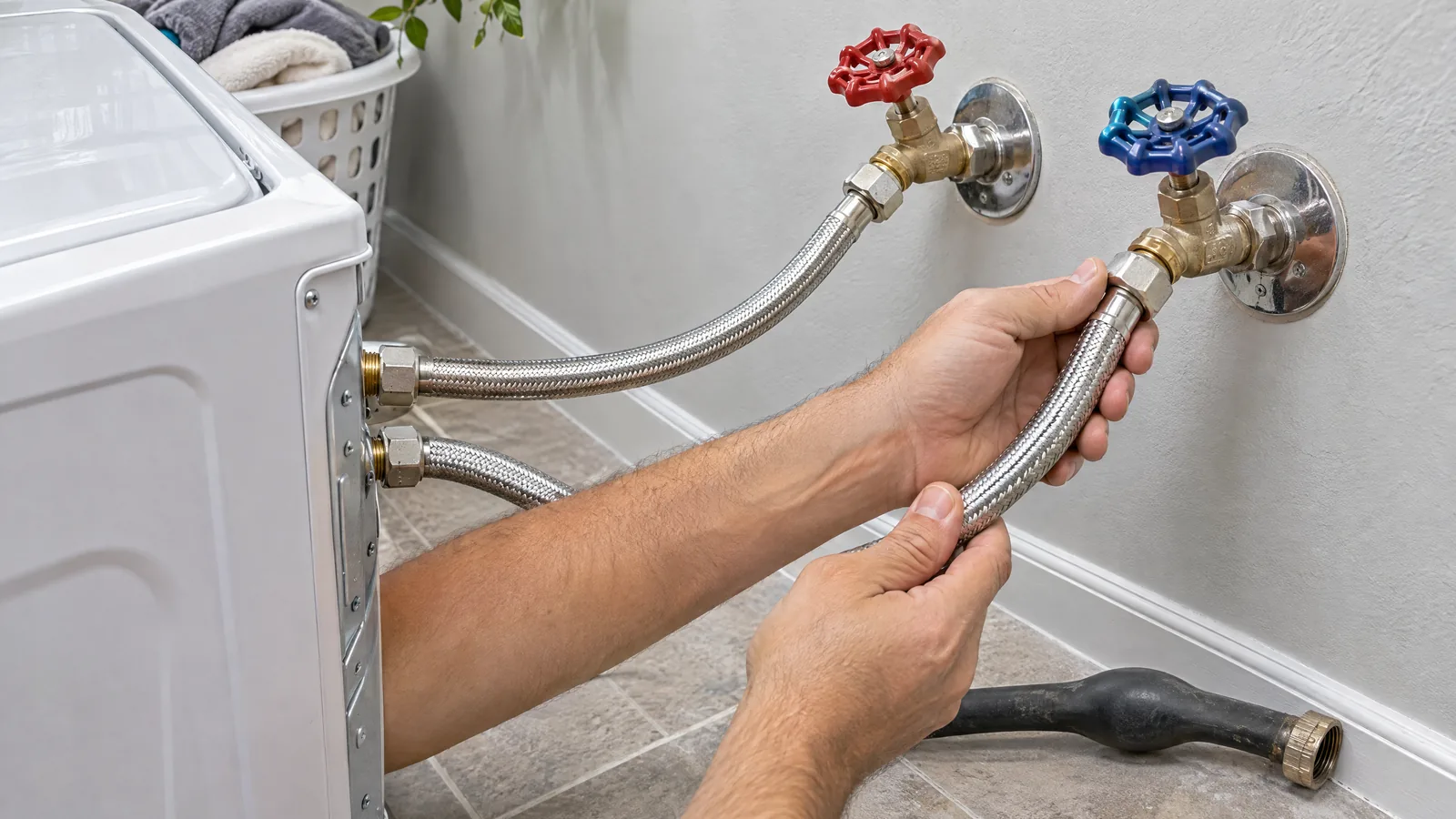
The cheapest insurance is the fill hoses. Whirlpool‘s support page says fill hoses should be replaced every five years. A burst rubber hose doesn’t hurt the washer, but it can flood a laundry room in minutes.
How long does a dryer last?
About 13 years in the NAHB study and 14 in the Fannie Mae table, while HomeGuide says 8 to 13 years depending on brand and use. Dryers are mechanically simple, so most failures are cheap parts: a thermal fuse, a heating element, a gas igniter, a belt, idler pulley or drum rollers.
Lint is what kills dryers early, and it’s also a fire risk. The U.S. Fire Administration reports that failure to clean (31%) was the leading factor in home clothes dryer fires from 2018 to 2020. A clogged vent makes the dryer run hot and long, which wears out heating parts and blows thermal fuses. If yours runs but stays cold, start with our guide to a dryer not heating.
How long does a dishwasher last?
The shortest-lived of the big kitchen appliances: 9 years in the NAHB study, 10 in the Fannie Mae table, and 8 to 15 years according to HomeGuide, which adds that proper use and maintenance usually stretch that lifespan.
What wears out first: drain pumps, inlet valves, door latches and gaskets, heating elements and the control board. Food debris and grease that build up in the filter and sump make the pump work harder, and standing water at the end of a cycle is the usual first symptom (see dishwasher not draining for the checks in safe order). Hard water is the other enemy, covered below.
How long do ovens, ranges and cooktops last?
Ranges are usually the longest-lived appliance in the kitchen: 13 to 15 years in the NAHB study, and the Fannie Mae table lists 17 years for a built-in electric range and 14 for a built-in gas range. HomeGuide suggests replacing an oven once it’s more than 10 to 20 years old or when the repair costs more than half the price of a new one.
What wears out first: bake and broil elements, gas igniters, temperature sensors, surface burner switches and the control board. Most of these are single-part repairs, which is why a 12-year-old range with a dead igniter is still usually worth fixing. Gas valves and gas lines are never a homeowner job.
Repair or replace? The 50 percent rule with real numbers
HomeGuide’s appliance repair guide puts the rule plainly: appliances more than 10 years old or with repairs costing more than 50% of a replacement typically aren’t worth repairing. It lists the average repair at $100 to $400 and a service call at $70 to $130. The age thresholds differ by appliance:
| Appliance | Usually worth repairing when | Usually time to replace when |
|---|---|---|
| Washing machine | Under 7 years old and the fix is under 50% of a new washer | 7 to 10 years old and needing frequent repairs |
| Dryer | Under 4 to 6 years old and the repair is minor | More than 6 to 10 years old with frequent repairs |
| Dishwasher | The repair is under 50% of a new unit | More than 5 to 8 years old, or repairs are expensive |
| Oven or range | Under 5 to 10 years old and the fix is under 50% of a new oven | More than 10 to 20 years old with repeated part failures |
| Refrigerator | Under about 10 years old with a single failed part | More than 10 years old and facing a major repair |
Worked example
- A 6-year-old washer stops draining. A drain pump repair in the middle of HomeGuide’s $100 to $400 washer repair range, say $250, against a new washer at $700 to $1,300, is 19% to 36% of replacement. Repair it.
- A 13-year-old refrigerator needs a $450 repair. HomeGuide prices a new refrigerator at $600 to $2,300 for the unit. Against a basic $600 model that’s 75%, and the fridge is already at its average lifespan. Replace it, unless it’s a built-in model that costs far more to replace.
- Don’t replace a working fridge just for the power bill: ENERGY STAR estimates a new certified model saves about $150 over its whole 12-year life.
For typical prices by part, see our appliance repair cost guide.
What shortens appliance life in Florida and South Carolina?
Three local conditions show up again and again in Florida and South Carolina homes: hard water, humidity and storm-season power problems.
Hard water
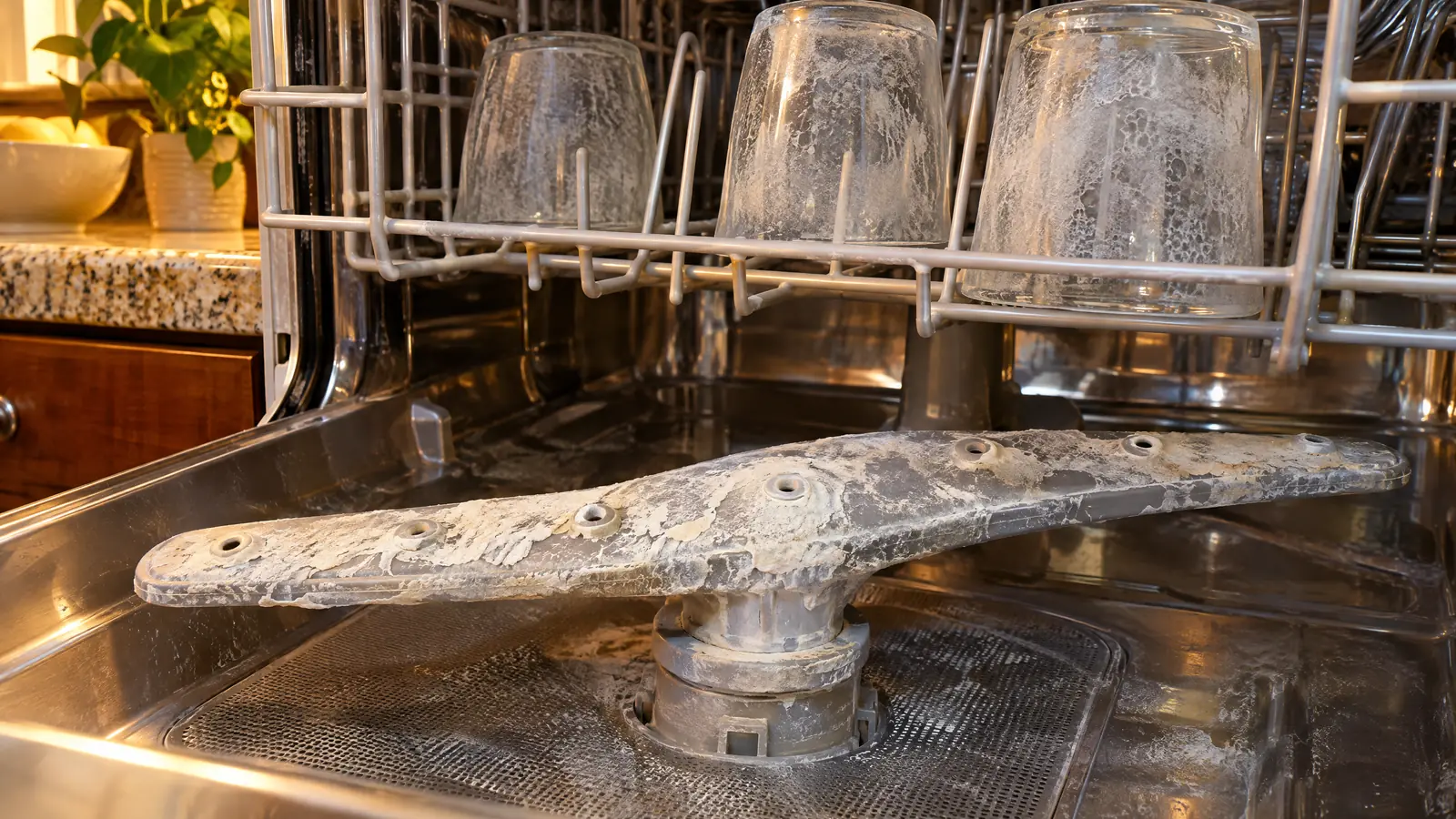
The U.S. Geological Survey classifies water above 120 mg/L of calcium carbonate as hard and above 180 mg/L as very hard, and notes that solid calcium carbonate deposits can form when hard water is heated. Over the years, scale builds on dishwasher heating elements, spray arms and inlet screens, and on washer valves. The USGS also names hard water as one of the most common causes of cloudy dishes. Your utility’s annual water quality report lists your hardness; if it’s high, use rinse aid, clean the dishwasher filter when dishes come out gritty, and ask about a softener.
Humidity
The EPA recommends keeping indoor humidity below 60 percent, ideally 30 to 50 percent. In a humid garage or an unconditioned laundry room, a refrigerator’s compressor runs longer, and metal parts, terminals and control boards corrode faster. A fridge or freezer in a hot Florida garage is working harder than the one in the kitchen.
Hurricane season and power surges
The Atlantic hurricane season runs from June 1 to November 30, and outages come with it. Ready.gov warns that power may return with momentary surges or spikes that can cause damage and advises disconnecting appliances during an outage. Control boards and compressor start relays are the parts surges hit most. Unplug what you can before a storm and plug back in once power is steady.
Maintenance that adds years
Safety first
- Unplug the appliance (or switch off its breaker) before cleaning coils, filters or anything behind a panel.
- Turn off both water valves before you touch washer or dishwasher hoses.
- Leave gas valves, gas lines and sealed refrigeration systems to a technician. If you smell gas, leave the house and call your gas utility or 911 from outside.
- Refrigerator: unplug it, then vacuum the condenser coils every 6 months and wipe the door gaskets every 4 months (HomeGuide). Keep the fridge at 40°F or below and the freezer at 0°F (FDA), and leave space around the cabinet for airflow.
- Washer: with the water off, check the fill hoses for bulges or cracks and replace them every five years (Whirlpool). Don’t overload, use the right detergent dose, and empty pockets so coins don’t reach the pump.
- Dryer: clean the lint screen every load and have the vent run cleaned out to the wall cap. A load that takes two cycles to dry is a vent warning.
- Dishwasher: unplug or switch off the breaker, then rinse the filter and clear food from the sump. In hard-water areas use rinse aid and run a cleaner through it.
- Range and oven: wipe spills before they bake on, keep burner ports clear.
- Everything: plug major appliances straight into a wall outlet, as the U.S. Fire Administration advises, not into extension cords.
Signs an appliance is near the end of its life
- It’s past the average age in the chart above and needs its second major repair in a year or two.
- The repair quote is more than half the price of a comparable new model.
- Rust through the cabinet or tub, or a cracked plastic tub, not just one bad part.
- For a refrigerator: a failed compressor or a refrigerant leak on a unit older than about 10 years.
If none of those apply, a single repair is usually the better deal. A technician’s diagnosis tells you which part failed and what the repair costs before you decide, and our technicians give a clear, upfront price before any work starts.
Frequently asked questions
How long do appliances last on average?
Most major appliances last about 9 to 15 years. In the NAHB and Bank of America study, dishwashers averaged 9 years, washers 10, garbage disposals 12, refrigerators and dryers 13, and ranges 13 to 15. Heavy use, skipped maintenance and hard water push an appliance toward the low end of that range.
How long do refrigerators last these days?
Plan on 10 to 15 years for a typical refrigerator. The NAHB study puts the average at 13, ENERGY STAR uses a 12-year lifetime in its savings math, and HomeGuide says up to 20 years with good maintenance. Models with ice makers and dispensers have more parts that can fail early.
Do appliances last as long with hard water?
Usually not. Hard water leaves calcium carbonate scale when it’s heated, which coats dishwasher heating elements, spray arms and inlet valves and clogs washer valves. Rinse aid, regular filter cleaning and a water softener in very hard water areas slow the damage.
Is it worth repairing a 10-year-old appliance?
It depends on the appliance and the repair. HomeGuide’s rule is that appliances over 10 years old, or repairs costing more than 50% of a replacement, usually aren’t worth fixing. A cheap part on a well-kept range or a high-end built-in fridge can still be worth it; a compressor on an ordinary 12-year-old fridge rarely is.
Not sure whether to repair or replace?
Caspi Home Service repairs refrigerators, washers, dryers, dishwashers, ovens and cooktops across Florida and South Carolina. You get a clear price before any work starts, with same-day and next-day appointments available.
Sources
- NAHB / Bank of America Home Equity: How Long Will Your House Last? (via Florida Realtors)
- Fannie Mae, Becoming a Landlord (2008): Life Expectancy of Appliances, source NAHB
- HomeGuide: Appliance Repair Costs
- HomeGuide: Refrigerator Cost
- HomeGuide: Washing Machine Repair Cost
- HomeGuide: Dryer Repair Cost
- HomeGuide: Dishwasher Repair Cost
- HomeGuide: Oven Repair Cost
- FDA: Refrigerator Thermometers, Cold Facts about Food Safety
- ENERGY STAR: Refrigerators
- Whirlpool Product Help: Checking the Fill Hoses
- U.S. Fire Administration: Appliance and Electrical Fire Safety
- USGS: Hardness of Water
- EPA: A Brief Guide to Mold, Moisture and Your Home
- National Hurricane Center: Tropical Cyclone Climatology
- Ready.gov: Power Outages