
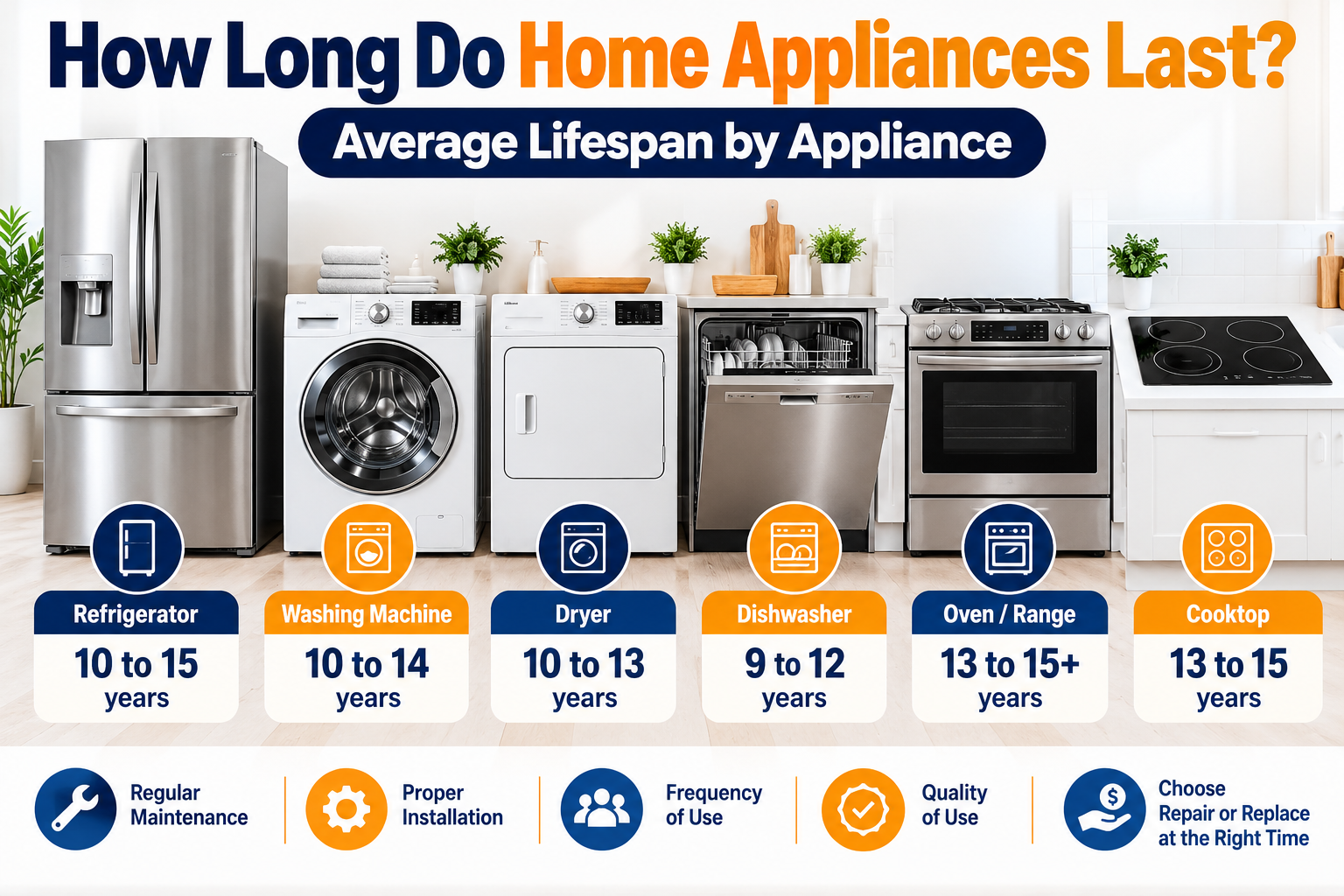
How Long Do Home Appliances Last?
Every single home appliance loses its functionality at some point. The critical question is when it will happen. In general, how long do appliances last depends on their type, brand, frequency and quality of use, and maintenance. On average, most home appliance lifespans vary from 9 to 15 years. However, specific devices require special attention. For example, most of the modern built-in fridges, such as Sub-Zero, can serve for 20 years or more if their condenser coils are cleaned, water filters are replaced, and door seals are maintained.
Refrigerator: 10 to 15 years
When considering the question ‘how long does a fridge last’, one should remember that most modern appliances have a lifespan between 10 and 15 years. Higher-end models, such as Sub-Zero, can function for 20 years or more. Routine maintenance, primarily cleaning the condenser coils, replacing water filters, and maintaining the door seal, can considerably extend the lifespan. Signs that your fridge is nearing the end of its life include insufficient cooling, excessive frost accumulation, unusual noises, and a constantly running compressor.
Washing Machine: 10 to 14 Years
If you’re asking how long does a washing machine last, expect roughly 10 to 14 years. Top-load washers often outlast front-load models slightly, though front-loaders use less water and energy. Overloading, using too much detergent, and ignoring an unbalanced drum all shorten a washer’s life. Leaks, loud spinning, and draining problems are signs it needs attention.
Dryer: 10 to 13 Years
Most people wonder about the dryer’s lifespan when asking ‘how long does a dryer last. A typical gas or electric dryer can last 10 to 13 years with routine maintenance. Regular cleaning of the lint filter after each cycle and having the dryer vent cleaned by a professional can prevent many issues. Having a dryer that takes longer to dry clothes is often the first sign of a problem.
Dishwasher: 9 to 12 Years
When it comes to how long does a dishwasher last, most models run 9 to 12 years. Hard water, food debris, and a clogged filter are its biggest enemies. Clean the filter monthly and run a cleaning cycle occasionally to prevent buildup. Poor cleaning results, standing water, and leaks usually mean a repair is needed.
Ovens, Ranges, and Cooktops: 13 to 15+ Years
Gas cooktops, ovens, and ranges typically have the longest lifespan among all home appliances. While electric cooktops have an average lifespan of 13 years, gas ones can last 15 years or more with proper maintenance. Malfunctions and wear and tear in these devices most commonly occur in the igniters, heating elements, and temperature sensors. Fortunately, most of these problems can be quickly resolved by a professional repairman.
Average Home Appliance Lifespan: Quick Reference
Appliance Typical Lifespan
- Refrigerator 10–15 years
- Washing Machine 10–14 years
- Dryer 10–13 years
- Dishwasher 9–12 years
- Oven / Range 13–15+ years
- Cooktop 13–15 years
Factors that Affect Home Appliance Lifespan
The longevity of a device depends on several factors, such as frequency and quality of use, maintenance, and installation. For example, washing machines and dryers that are used by large families have a shorter lifespan than those used by single people. Furthermore, improper maintenance can considerably reduce the appliance’s service life. It is recommended to perform regular maintenance checks that may help you prolong the functioning of your devices.
Replacement or Repair?
The rule of thumb when deciding whether to replace or repair a broken device is – if the appliance is less than half of the way through its expected lifespan and the repair cost is less than half the price of a new replacement, it is better to fix it. Most modern appliances have a good lifespan and can be repaired if a vital part is defective. For example, a broken pump, heater, or igniter in a dryer, washer, or dishwasher can be replaced. Furthermore, a professional repairman can assist in replacing almost any defective part in a washing machine, dryer, dishwasher, range, or oven.
Prolonging the Lifespan of Home Appliances with Caspi Home Service
From a leaking fridge to a dryer that stopped working, Caspi Home Service will assist in fixing any issues with your appliances. Our professional technicians can provide refrigerator repair , washer & dryer repair , dishwasher repair, and oven & range repair in Tampa, Orlando, Jacksonville, Charleston, and Columbia. We understand how important functional home appliances are, and that is why we provide the most competitive rates and same-day service. Additionally, we guarantee 90-day coverage of all parts and labor involved in the repair process. Contact our friendly staff at (813)-819-8285 or schedule an appointment online.
Final Thoughts
Most home appliances last between 9 and 15 years, but how long yours actually lasts depends on the brand, how often you use it, how well it was installed, and how consistently it’s maintained. Simple habits like cleaning filters, coils, and vents can add years to an appliance’s life and help you avoid unexpected breakdowns.
When something does go wrong, don’t rush to replace it. Many issues come down to a single worn-out part that a professional technician can quickly fix at a fraction of the cost of a new appliance. Knowing the typical lifespan of each appliance helps you make a confident, cost-effective decision between repair and replacement.
Frequently Asked Questions
-
Which home appliance lasts the longest?
Ovens, ranges, and cooktops generally have the longest lifespan. Gas models can last 15 years or more, while electric cooktops average around 13 years. High-end built-in refrigerators like Sub-Zero can also exceed 20 years with proper care.
-
How do I know when my refrigerator is nearing the end of its life?
Common warning signs include poor cooling, heavy frost buildup, unusual noises, and a compressor that seems to run constantly. If your fridge is over 10 years old and showing several of these symptoms, it’s worth having a technician assess whether repair still makes sense.
-
Should I repair or replace a broken appliance?
A helpful rule of thumb: if the appliance hasn’t yet reached the halfway point of its expected lifespan and the repair costs less than half the price of a new one, repairing it is usually the smarter choice. Many key parts, such as pumps, heaters, and igniters, can be replaced affordably.
-
What shortens the lifespan of a washer or dryer?
Overloading, using too much detergent, and ignoring an unbalanced drum can wear out a washing machine early. For dryers, a clogged lint filter or dirty vent forces the machine to work harder. Heavy use, such as laundry for a large family, can also reduce the lifespan of both.
-
How can I make my appliances last longer?
Regular maintenance makes the biggest difference. Clean refrigerator condenser coils and replace water filters, clear the dryer lint filter after every load, clean the dishwasher filter monthly, and avoid overloading your washer. Addressing small problems early also prevents them from turning into costly breakdowns.